


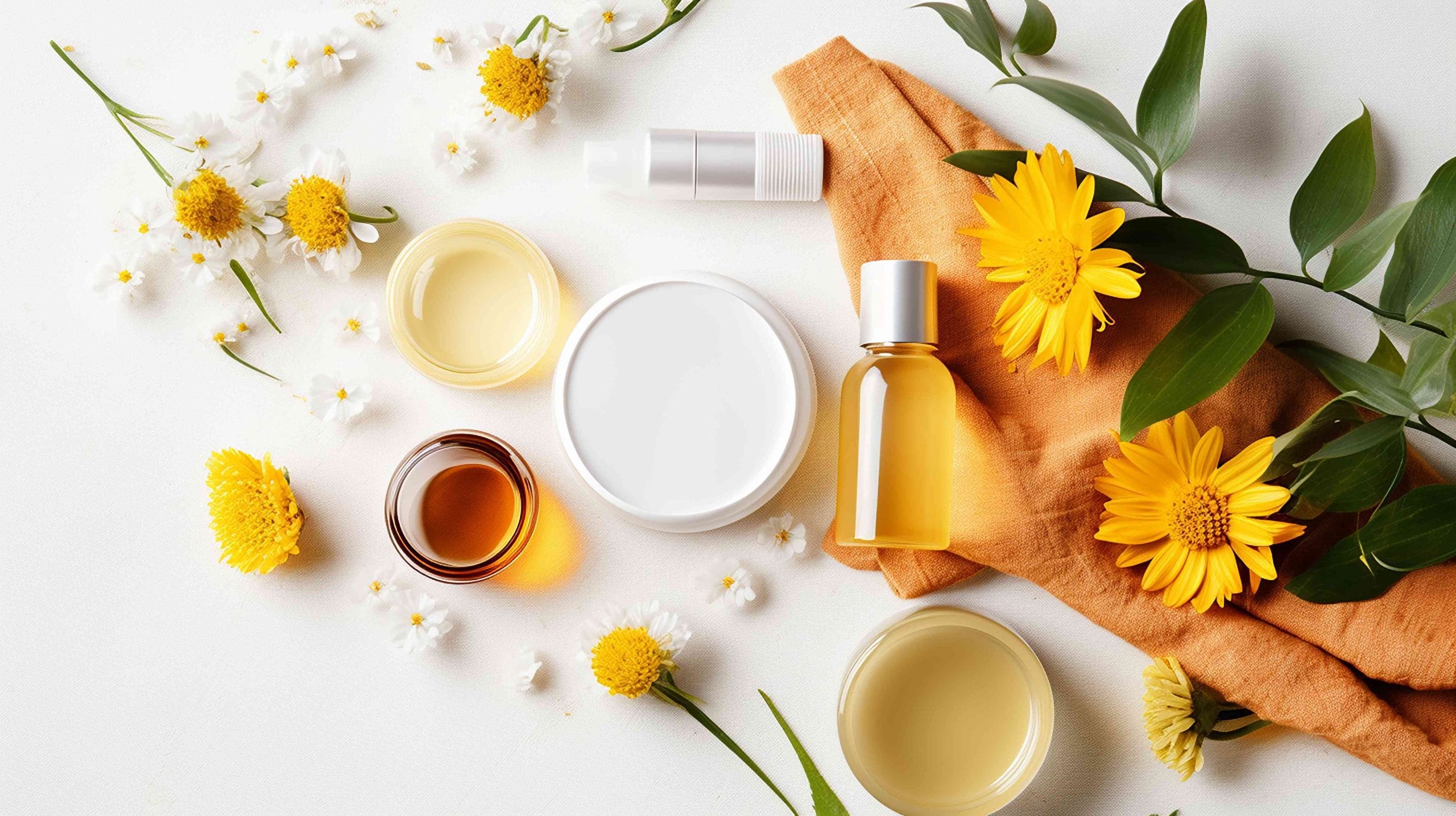
Restoring value to waste from the food industry — or even from cosmetic process by-products — is no longer optional. Upcycled ingredients for cosmetics are now one of the key challenges facing cosmetic brands.
To quote Lavoisier’s famous mantra:
“Nothing is lost, nothing is created, everything is transformed.”
Circular economy: from concept to necessity
The traditional linear economy, based on extraction, production, consumption, and disposal, relies heavily on non-renewable resources and generates significant pollution of soil, air, and water.
In contrast, a circular economy considers the entire life cycle of a product — from design and production to consumption and end-of-life — with the objective of maximizing efficiency, minimizing waste, and preserving natural resources.
To address global concerns such as biodiversity loss and resource depletion, upcycling offers a powerful solution by rescuing materials that would otherwise be incinerated or landfilled. These disposal methods often generate methane emissions, a greenhouse gas even more potent than carbon dioxide according to the Environmental Protection Agency.
While upcycling is already well established in fashion and design, its adoption in the cosmetic industry is more recent — but rapidly accelerating.
Is upcycling really new to cosmetics?
Not exactly. Upcycling has existed for decades, but what is new is the global context in which it now operates.
Over the past ten years, the cosmetic market has seen a strong rise in:
- Natural and bio-labelled cosmetics
- Eco-sourced ingredients
- Environmentally friendly formulation processes
- Recyclable or reusable packaging
This shift is driven by consumers’ growing environmental awareness and demand for transparency. According to a 2019 study by the Personal Care Products Council:
- 84% of millennials say sustainability influences their purchasing decisions
- Over 60% of Gen Z and Millennials pay attention to ingredient sourcing and processing
Consumers are increasingly willing to pay more for brands with a positive social and environmental impact.
Pandemic acceleration and supply chain disruption
The COVID-19 pandemic further accelerated sustainable cosmetic trends:
- Consumers became more attentive to product origin and environmental impact
- Supply chain disruptions pushed brands to explore local and alternative raw material sources
- Food industry by-products gained attention for their proven efficacy as emollients, texturizers, and active ingredients
As a result, waste management — especially in the food industry — emerged as a critical issue, alongside the question of how to reintegrate waste into new cosmetic product development.
Circular economy solutions in cosmetics
Several approaches already support circularity in cosmetic product design:
- Ingredients produced with minimal waste
- Ingredients that add value to untapped resources or by-products
- Production processes designed to reduce waste
- Reusable or easily recyclable packaging
- Zero-packaging solutions (e.g. solid cosmetics)
While brands increasingly adopt zero-waste policies for finished products, upcycling addresses the upstream of the supply chain, where environmental impact is often highest.
Upcycling: defining the concept clearly
Upcycling is often confused with recycling or downcycling. However, the differences are essential:
- Recycling: transforming waste into a product of similar value
- Downcycling: transforming waste into a product of lower value
- Upcycling: transforming waste into a product of higher value
In cosmetics, upcycling primarily involves the use of co-products and by-products.
- Co-products are desirable secondary outputs generated during production and reused or sold profitably
- By-products are residual materials with intrinsic value that can be reused, recycled, or repurposed
Through upcycling, these materials become high-performance cosmetic ingredients.
Upcycling in cosmetics: more than a trend?
Upcycling first gained momentum in the food industry, where one-third of all food produced globally is wasted each year (United Nations). To reduce this loss, producers increasingly add value to food by-products.
The pandemic further accelerated the valorization of food waste through eco-friendly approaches. Many food-derived by-products have already demonstrated strong cosmetic benefits as:
- Emollients
- Texturizers
- Active ingredients
Cosmetic brands — from indie startups to major international players — are now leveraging this potential. Upcycled raw materials are being integrated into existing formulations or used to develop entirely new product lines.
Consumer interest confirms this momentum:
- 58% of Canadians consider food waste an environmental issue when purchasing (Mintel, 2021)
- In the US, 25% of skincare users aged 25–34 are concerned about the environmental impact of their products (Cosmetics & Toiletries)
While data is still limited, upcycled beauty is proving to be a scalable and commercially viable model, especially for mass-market products.
Conclusion: upcycling as a long-term solution
Upcycling is no longer just a trend — it is a strategic lever for sustainable cosmetic development. By transforming waste into high-value ingredients, cosmetic brands can respond to consumer expectations, reduce environmental impact, and strengthen their commitment to circular economy principles.
Discover our partners’ solutions to integrate upcycled ingredients into your cosmetic formulations and request your brochure.