


Biofermentation is transforming multiple industries, from food and beverages to pharmaceuticals, personal care and agriculture. By leveraging microorganisms such as bacteria, yeast and fungi, formulators can produce high-value compounds while reducing reliance on petrochemical inputs and supporting sustainability objectives.
However, as biofermentation processes scale up, operational challenges become more pronounced. Among them, foam formation remains one of the most persistent and performance-critical issues. Uncontrolled foam can compromise yields, disrupt process stability and increase operational costs.
Effective foam control is therefore not an auxiliary consideration, but a core element of successful and sustainable biofermentation.
What Is Biofermentation?
Biofermentation is a biological process in which microorganisms convert raw materials into functional compounds. These can include enzymes, amino acids, peptides, probiotics and a wide range of active ingredients used across industrial applications.
Modern biofermentation—often referred to as precision fermentation—optimises microbial pathways to deliver targeted, high-purity compounds at industrial scale. Compared to traditional chemical synthesis, biofermentation enables:
- Reduced environmental impact
- Improved ingredient consistency and bioavailability
- Broad cross-industry applications, from biotechnology to cosmetics
As fermentation technologies advance, process efficiency and control become essential to maintaining performance and scalability.
Why Foam Control Matters in Biofermentation
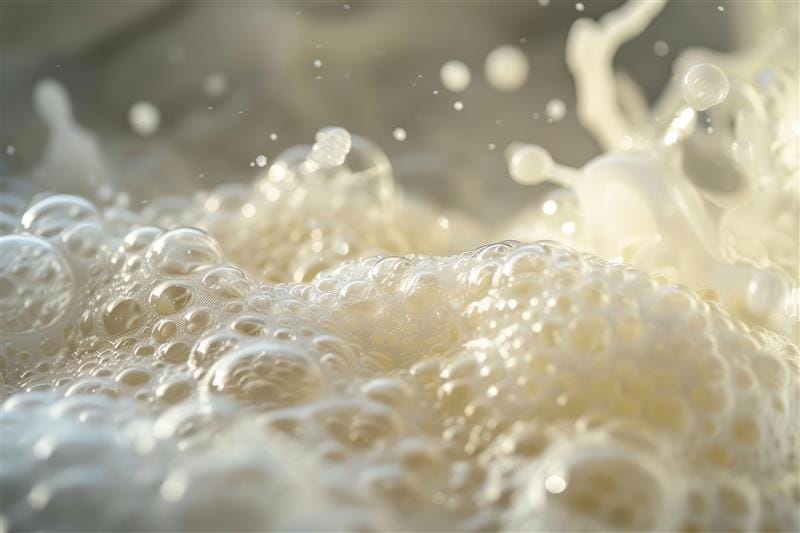
Foam is a natural by-product of microbial growth. During fermentation, proteins, polysaccharides and other surface-active metabolites interact with aeration and agitation, creating stable foam structures.
If not properly controlled, foam can:
- Reduce effective reactor volume and productivity
- Increase contamination risk, particularly in pharmaceutical or biotech processes
- Disrupt oxygen transfer and nutrient distribution
- Generate additional costs through downtime, cleaning and equipment stress
For formulators, foam management is not simply an operational concern—it can determine the economic and technical viability of a fermentation process.
Scientific Drivers of Foam Formation
Foam behaviour in biofermentation is influenced by multiple parameters, including microbial strain selection, feedstock composition, pH, temperature and aeration strategy.
Proteins, metabolites and biosurfactant-like compounds stabilise foam bubbles, making them resistant to collapse. These dynamics can directly affect:
- Oxygen transfer efficiency
- Sensor accuracy in controlled processes
- Downstream purification and recovery steps
As a result, foam control strategies must be adapted to the biological system and process conditions rather than applied as a generic solution.
Foam Control Strategies for Biofermentation Processes
There is no universal approach to foam management. The optimal solution depends on the organism, substrate, regulatory context and production scale.
Effective foam control strategies typically combine:
- Silicone-based antifoams, offering fast-acting, low-dosage performance, widely used in enzyme and yeast fermentations
- Non-silicone alternatives, preferred in sensitive pharmaceutical or biotech applications where silicone residues must be avoided
- Bio-based antifoams, aligned with sustainability goals and regulatory expectations in food and nutraceutical production
- Process optimisation, including aeration, agitation and dosing strategies tailored to fermentation dynamics
By aligning antifoam selection with process parameters, foam can be managed without compromising microbial activity or downstream processing.
Supporting Biofermentation with Application Expertise
Successful foam control goes beyond product selection. Understanding the biological and mechanical drivers of foam is essential to implementing robust, scalable solutions.
Application-driven support enables formulators to:
- Identify the root causes of foam formation
- Select antifoam technologies adapted to regulatory and performance constraints
- Optimise dosing strategies throughout the fermentation cycle
This integrated approach helps protect yields, reduce risks and maintain process stability as production scales.
Future Perspectives: Sustainable Biofermentation and Foam Management
As precision fermentation continues to expand, future foam control solutions will increasingly focus on sustainability and predictability.
Key developments include:
- Bio-based and low-impact antifoam technologies
- Digital monitoring tools to anticipate foam formation in real time
- Solutions compatible with evolving regulatory and sustainability frameworks
Managing foam effectively is a prerequisite for scaling biofermentation sustainably. With the right technical strategy, foam becomes a controlled variable rather than a limiting factor.
A Process-Critical Challenge, Addressed Strategically
Foam is unavoidable in biofermentation—but it does not have to compromise performance. Through the combination of process understanding, tailored technologies and technical expertise, foam control can support reliable, efficient and sustainable fermentation operations.