


Lactose is one of the most widely used excipients in solid dosage forms. Co-product of the dairy industry, its journey from farm to tablet involves water and energy.
As ESG imperatives reshape the pharmaceutical industry from the inside out, that journey is coming under scrutiny. Sustainability is no longer a concern limited to manufacturing sites, it reaches every component of the final product, including excipients. For lactose specifically, questions around sourcing, processing footprint, and resource consumption are becoming strategic.
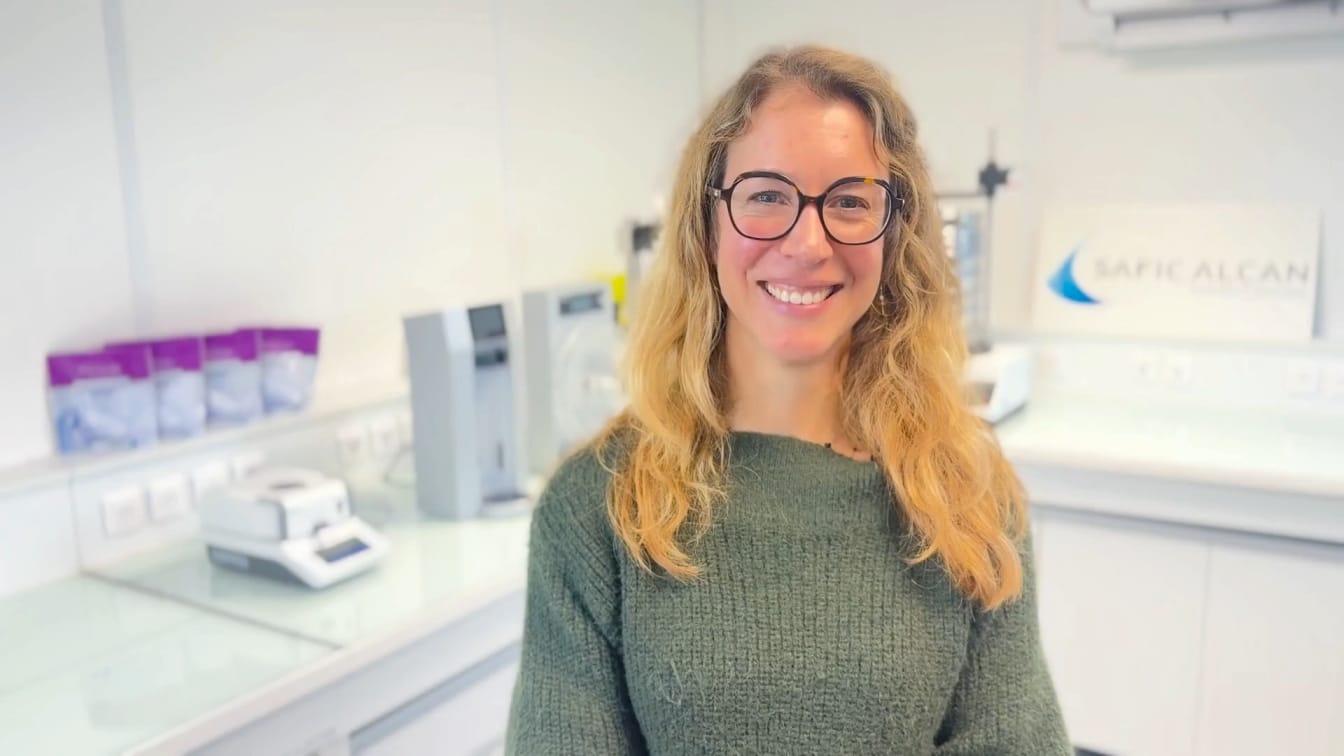
We invited Maeva Croué, ESG Coordinator and Product Manager at Lactalis Ingredient Pharma, in our application laboratory in Etampes, to explore how these challenges are being addressed in the company.
Maeva Croue: For several years now, ESG has been an integral part of the Lactalis Group's policy. It actually reports directly to our CEO.
Concretely, in 2025, 15% of our investments were allocated to projects aimed at reducing our energy consumption and better managing our water resources.
On the supply chain side, we've put in place a bonus for farmers to encourage good agricultural practices and more sustainable methods. And at the same time, we're running a pilot project across 100 experimental farms, with the goal of identifying the levers for reducing greenhouse gas emissions directly at the farm level.
MC: The carbon footprint of pharmaceutical lactose is around 11 kg of CO2 equivalent per kg of lactose. This assessment is based on two factors.
The first is the dairy supply chain. We know that it accounts for 95% of the emissions associated with our ingredient. In France, when milk leaves a farm, it represents around 1 kg of CO2 equivalent per liter of milk produced.
The second factor is the industrial impact, everything linked to factory production, our infrastructure, and our processes. When we talk about processes, there are various stages such as crystallization, evaporation, and heating, all of which require energy. For these, we're actively looking at alternative energy sources to minimize the carbon footprint of our ingredient.
In fact, by 2027, at the Retiers site, we have planned a project that will generate heat through the combustion of recovered solid compounds, which will allow us to significantly reduce emissions at that site.
MC: It’s important to note that the production of pharmaceutical-grade lactose is very water-intensive. For example, 10,000 tons of lactose is equivalent to 20 Olympic-sized swimming pools. And if we break that down to a per-ton basis, it amounts to between 5 and 7 liters of water required per kilogram of lactose produced.
Water is our challenge, but it’s also a real opportunity. Why? Because when we go from a liquid solution (milk) to a solid solution (powder) we remove up to 90% of the water. And that water well, what could be better than recovering it to reuse it in our processes? Given that the goal is to limit water withdrawals from the natural environment. And so, to limit these withdrawals, we have three options. First, optimize our production processes to reduce our water needs. Second, reuse the water from our processes; this allows us to supply processes that are typically energy-intensive, such as cooling boilers, washing glass, and cleaning our equipment or membranes, so this water is reused within the system. And the third lever is to recycle the water at the wastewater treatment plant (WWTP) outlet. First, we need to control the water entering the WWTPs to ensure it is as clean as possible and minimize treatment, and then ensure that the water leaving the WWTP is suitable for reuse, not in the process this time, but, for example, as is the case in the summer in Retiers, where we use this water to cool the cooling tower.
MC: ESG encourages us to innovate in new ways and to commit our company to a sustainable and responsible approach.
Discover our full range of Lactalpha
Watch the full interview and dive deeper into Lactalis's ESG approach here
