


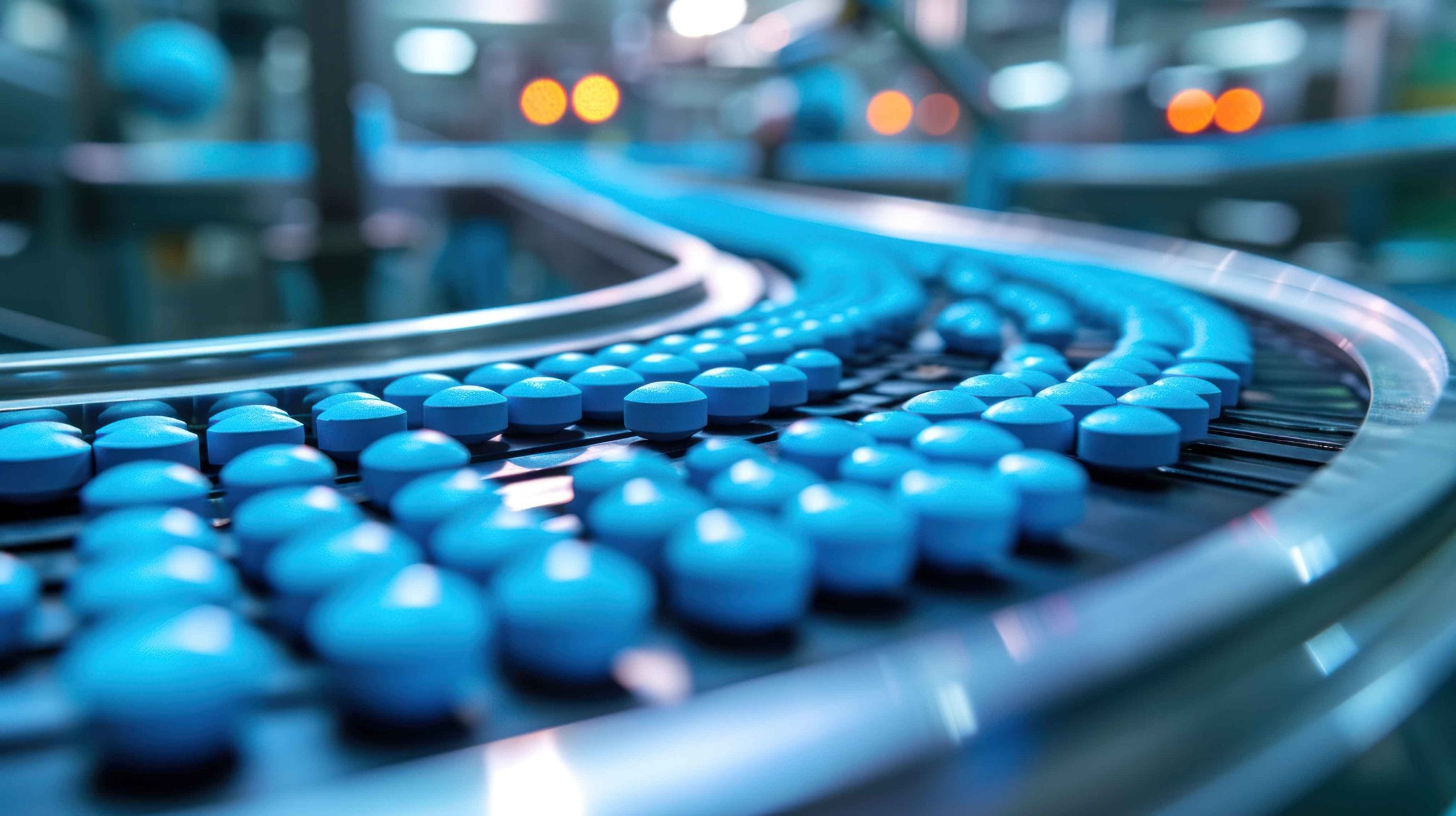
Tablet coating is far more than a simple outer layer. It is a critical formulation step that directly impacts drug efficacy, stability, patient compliance, and overall product performance.
At Safic-Alcan, our advanced smart coating solutions are designed to deliver uniform coverage, enhance product appearance, and precisely control drug release profiles. This article explores the fundamentals of tablet coating and highlights the latest innovations in film coating and smart coating technologies.
Why tablet coating matters: key objectives and benefits
Tablet coating plays a vital role in pharmaceutical manufacturing and industrial biomedical engineering, offering multiple functional and regulatory advantages:
- Uniform coverage and aesthetic appeal
Ensures consistent color and appearance across dosage units, improving identification, branding and patient perception. - Enhanced stability and protection
Protects active pharmaceutical ingredients (APIs) from moisture, oxygen, temperature fluctuations and light, contributing to corrosion protection and extended shelf life. - Functional efficiency
Enables control of drug release profiles, masks unpleasant taste or odors, reduces irritation and improves swallowability. - Regulatory compliance
Supports compliance with pharmaceutical quality, safety and efficacy standards. - Improved handling and processing
Enhances tablet flowability, reduces dust generation and facilitates downstream packaging operations.
Film coating vs. sugar coating: the evolution toward smart coatings
While sugar coating has historical importance, film coating has become the industry standard for modern pharmaceutical formulations. Film coatings align perfectly with today’s demand for efficiency, performance and compatibility with thin film technologies.
Advantages of film coating
- Minimal weight gain
Typically adds only 2–5% of the tablet core weight, preserving dosage accuracy (depending on aesthetic or functional requirements). - Enhanced durability and flexibility
Improved resistance to chipping, cracking and abrasion. - High versatility
Suitable for tablets, capsules, beads, granules, drug powders and crystals. - Efficient application
Applied via spray atomization for uniform and reproducible film formation. - Flexible solvent systems
Available as aqueous or organic-based systems, depending on API properties and process constraints. - Smart coating potential
Enables advanced, stimuli-responsive functionalities, such as externally triggered or site-specific drug release.
Types of film coatings
Immediate-release film coatings
Immediate-release coatings are primarily used to:
- Mask unpleasant taste or odor
- Improve tablet appearance
- Facilitate swallowing
They do not modify the drug release profile and are ideal when rapid API release is required.
Modified-release film coatings
Modified-release coatings are designed to control where and how fast the API is released.
These include:
- Delayed-release coatings (e.g. gastro-resistant or enteric coatings) that protect the API from stomach acid and enable targeted intestinal delivery
- Sustained-release coatings that prolong API release over time, optimizing therapeutic effect and dosing frequency
Core components of film coating formulations
Developing an effective film coating requires a precise balance of carefully selected raw materials:
Polymers – the structural backbone
Non-enteric film formers (Immediate release):
- Cellulose ethers (e.g. Hydroxypropyl Methylcellulose – HPMC)
- Vinyl polymers (e.g. Polyvinylpyrrolidone – PVP)
- Glycols (e.g. high-molecular-weight polyethylene glycol – PEG, which may also act as a plasticizer)
Enteric film formers (Modified release):
- Cellulose acetate phthalate (CAP)
- Acrylic acid polymers
- Shellac and other high-molecular-weight polymers
Plasticizers
Plasticizers improve film flexibility, elasticity and resistance to cracking.
Common examples include triethyl citrate.
Colorants and opacifiers
Ingredients such as titanium dioxide (TiO₂) enhance visual appeal, mask the core tablet color and improve product differentiation.
Solvents / vehicles
Solvents enable proper dispersion of coating components and ensure consistent film formation during application.
Safic-Alcan: your partner in advanced coating solutions
At Safic-Alcan, we support pharmaceutical formulators with cutting-edge coating technologies designed to enhance product performance, manufacturing efficiency and patient experience.
Our expertise in polymers, excipients and smart coating systems allows us to deliver tailored solutions that meet the evolving challenges of modern pharmaceutical development.
Ready to elevate your formulations?
Discover how Safic-Alcan’s advanced smart coating solutions can support your pharmaceutical product development and manufacturing processes.
Contact Safic-Alcan today to learn more about our coating technologies and formulation expertise.