



Hero background

Empower your formulations.
Accelerate your innovation.

We are Safic-Alcan Germany

Safic-Alcan Germany is part of the Safic-Alcan Group, a global distributor of specialty chemical ingredients. We support manufacturers, formulators and R&D teams by connecting ingredients, expertise and local market knowledge.

What we do

Safic-Alcan distributes specialty chemical ingredients across a wide range of industries, including life sciences and performance materials. We act as a link between suppliers and local markets, ensuring reliable access to ingredients, technical information and application support.

How we support customers

Beyond ingredient distribution, Safic-Alcan provides local commercial and technical support, access to formulation expertise, regulatory assistance and supply chain reliability. Our teams work closely with customers to support development, sourcing and market needs.

Our local presence in Germany

Safic-Alcan Germany combines the strength of a global group with local teams, stock and expertise. This local presence enables proximity to customers, fast response times and market-specific support.

Accelerate your innovation with a trusted partner in specialty chemicals

Access global sourcing

through an international supplier network

Co-create your formula

with tailored support from our experts

Test text alt

Secure your supply chain

with streamlined and reliable global logistics

Innovate faster

with our integrated technical laboratories
Discover industry insights

See more insights
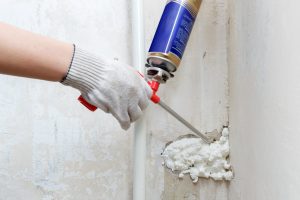
Close-up of silicone sealant applied between glass and aluminium facade components in a modern construction project.
Technical Article

Silicone Sealants for Construction: Performance requirements and Selection Guide

Silicone sealants are elastomeric polymer materials applied to joints and interfaces in buildings to block moisture, air, and contaminants while accommodating structural movement. In construction applications (from concrete joints and curtain wall glazing to flat roofs and window frames) their performance over decades determines the durability and weather-resistance of the whole building envelope. Quick answer: … <a href="https://www.safic-alcan.com/en-de/industry-articles/silicone-sealants-construction/">Continued</a>
Laboratory view of polyurethane raw materials and coating formulations, illustrating MDI, TDI and waterborne polyurethane technologies.
Industry Insights

Polyurethane Systems: MDI vs TDI vs Waterborne 

TL;TR MDI (methylene diphenyl diisocyanate) is the dominant isocyanate for rigid foam, elastomers and structural applications, offering lower vapour pressure and better mechanical performance than TDI. TDI (toluene diisocyanate) remains the standard for flexible slabstock foam. Waterborne polyurethane dispersions (WPU/PUD) replace both in coatings and adhesives when VOC compliance or worker safety constraints apply. The … <a href="https://www.safic-alcan.com/en-de/industry-articles/polyurethane-systems-mdi-tdi-waterborne/">Continued</a>
Transparent skincare serum, gel and cream textures in a clean laboratory-inspired environment, illustrating glass skin formulations, hydration ingredients, ceramides and cosmetic science.
Consumer Trends

Formulating for a glass-skin finish: choosing humectant, occlusive and active classes

This article is the formulation companion to What ‘glass skin’ actually is — the formulation trend explained, which covers the market trend, consumer context, and skin biology behind the aesthetic. This piece focuses on ingredient class selection, mechanism, trade-offs, and sourcing considerations. TL;TR Formulating for a glass-skin finish means combining five ingredient classes in sequence: … <a href="https://www.safic-alcan.com/en-de/industry-articles/formulating-glass-skin-finish/">Continued</a>

Learn more about Safic-Alcan France