


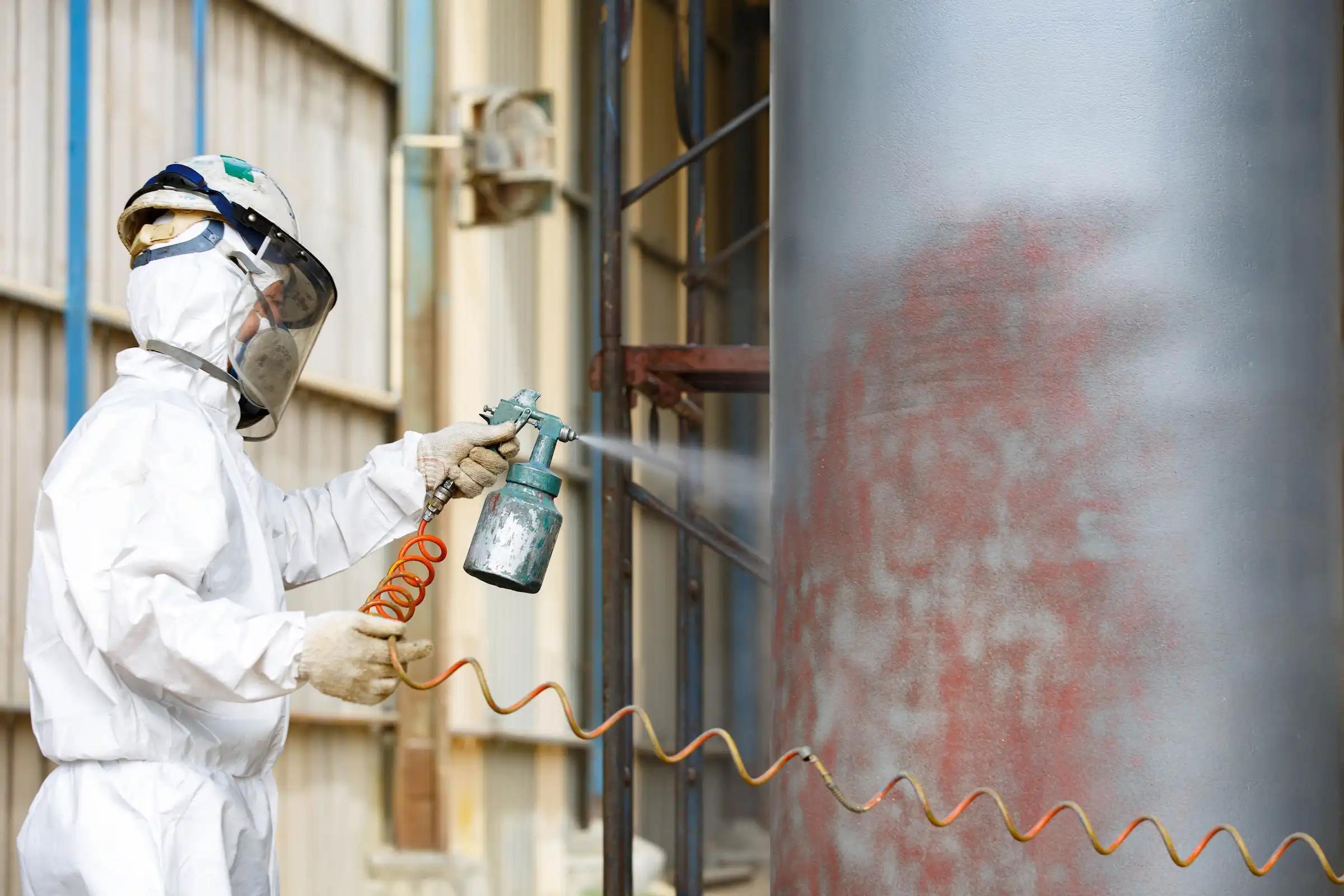
Corrosion costs the global economy an estimated 3 to 4% of GDP annually. For structural steel in infrastructure, marine environments, chemical processing plants, and industrial equipment, the dominant protective strategy is the organic coating — a layered system designed to slow the electrochemical reactions that convert iron to iron oxide. At the heart of every anti-corrosion coating formulation sits the corrosion inhibitor: the ingredient that actively interrupts this process rather than merely slowing electrolyte access to the metal surface.
Understanding how inhibitors work, which mechanism applies to which substrate and environment, and how the regulatory transition away from chromates is reshaping the available palette is essential for anyone specifying or formulating industrial protective coatings.
The Electrochemical Basis of Corrosion
Corrosion of steel is fundamentally an electrochemical process. In the presence of water and oxygen, anodic and cathodic sites form on the metal surface. At the anode, iron is oxidized: Fe → Fe²⁺ + 2e⁻. At the cathode, oxygen is reduced: O₂ + 2H₂O + 4e⁻ → 4OH⁻. The resulting ions react to form rust. Current flows between anode and cathode through the electrolyte (water with dissolved ions) and through the metal itself.
The Bureau of Reclamation review on corrosion inhibiting mechanisms in coatings — one of the most comprehensive technical surveys of anti-corrosion coating science — establishes that binders in organic coatings provide inherent barrier protection by limiting access of oxygen, water, and corrosive anions to the substrate. However, all organic binders are permeable to some degree, and corrosive species inevitably reach the metal surface over time. This is where pigment-level inhibition becomes critical: it must function at the interface, not just at the film surface.
Three Mechanisms of Inhibition
1. Barrier Mechanism
The simplest mechanism is physical exclusion — pigments and extenders that block the pathways through which water and ions diffuse to the metal surface. Lamellar pigments (micaceous iron oxide, aluminium flake, talc) orient parallel to the substrate and force diffusing species to travel a tortuous path through the binder matrix, substantially extending the time before corrosive agents reach the metal.
Research on pigment volume concentration (PVC) effects in epoxy primers confirms that the optimal PVC for lamellar pigments is formulation-dependent: wollastonite and zinc phosphate outperform talc in combined anticorrosion efficiency and adhesion, while talc leads on physical-mechanical properties alone. The critical PVC — above which barrier efficiency deteriorates due to air voids in the pigment packing — is a key formulation parameter.
A ScienceDirect review on advances in corrosion protection notes that while barrier protection is universally assumed to be the primary function of organic coatings, the evidence base for the pigment barrier contribution specifically is less robust than for active inhibition — reinforcing the case for multi-mechanism systems.
2. Active (Passivation) Mechanism
Active inhibition relies on sparingly soluble pigments releasing inhibitive ions when water penetrates the coating. These ions migrate to the metal surface and either form a thin passivating oxide layer (anodic inhibitors) or block the cathodic reaction sites.
Phosphate pigments are the most widely adopted chromate-free active inhibitors. Zinc phosphate, in particular, has three proposed inhibition pathways: direct phosphate ion passivation of the iron surface; formation of a zinc-iron complex at the interface; and binding of phosphate ions with components of the binder resin to form protective metal soaps. PMC research on zinc phosphate in waterborne acrylic coatings confirms that zinc phosphate addition inhibits the anodic corrosion process and enhances wet adhesion, reducing lateral diffusion of the corrosive medium at the coating-metal interface.
The PMC review on phosphate inhibition of steel reinforcement confirms the thermodynamic basis: phosphate ions promote ferrous phosphate precipitation, creating a barrier layer at the metal surface that is chemically stable across the pH range of 8–12. Zinc phosphate modifications — aluminium zinc phosphate, zinc molybdate phosphate, zinc silicophosphate — extend the base chemistry to address specific binder systems and service environments.
Molybdate pigments operate through a similar anodic passivation pathway but are more sensitive to binder choice. Technical literature on corrosion inhibiting mechanisms notes a specific risk: molybdates can accelerate premature binder ageing, leading to film embrittlement — a relevant trade-off in formulations targeting long service life.
3. Cathodic (Sacrificial) Mechanism
Sacrificial protection works by preferential oxidation of a more electronegative metal in electrical contact with the steel substrate. Zinc is the standard sacrificial pigment in industrial primers. When zinc particles are in contact with each other and with the steel, as established in ScienceDirect research on zinc-rich primer electrochemistry, the zinc acts as an anode and the steel as a cathode — the potential difference drives zinc dissolution rather than iron dissolution.
The three-coat system (zinc-rich primer / epoxy midcoat / polyurethane topcoat) is the dominant specification for structural steel bridges and heavy industrial structures. ScienceDirect research on zinc-rich primer durability shows that initial zinc activity depletes progressively, and the protection mechanism shifts over time from cathodic protection to barrier protection, as zinc corrosion products fill the primer pores.
A critical formulation variable is zinc loading. For effective galvanic coupling, zinc particles must form a percolating network through the binder — typically requiring pigment volume concentrations above 60% for organic zinc-rich primers. PMC research on graphene-modified zinc primers demonstrates that partial substitution of zinc dust with graphene nanosheets at reduced PVC can maintain galvanic action by improving electrical connectivity between zinc particles, reducing total zinc content without sacrificing cathodic protection performance.
The Regulatory Transition: Replacing Chromates
Hexavalent chromium (Cr(VI)) was the dominant corrosion inhibitor for aerospace, military, and high-performance industrial coatings for decades. Strontium chromate and zinc chromate provided exceptional, multi-mechanism protection: anodic passivation, self-healing through chromate ion migration to scratched areas, and broad substrate compatibility. Their toxicity and carcinogenicity ended that dominance.
Under REACH Regulation (EC) No 1907/2006, Cr(VI) compounds — including chromate pigments — are subject to authorisation requirements across the EU. Researches on chromate-free strategies for magnesium alloys notes that equivalent performance alternatives have only recently emerged, despite decades of research, reflecting the genuinely exceptional inhibitive chemistry of Cr(VI).
The current chromate-free palette for primer formulations includes:
- Zinc phosphate and its modifications (aluminium zinc phosphate, zinc molybdate phosphate) — established workhorse replacement, well-characterised, lower performance ceiling than chromate in aggressive environments.
- Calcium-modified silica — heavy-metal-free, non-toxic, ion-exchange mechanism similar to zeolites; reviewed in Wiley's Advances in Polymer Technology as an environmentally safe alternative with growing adoption.
- Zeolite-based pigments — porous structure allows loading of inhibitor ions (Ce³⁺, La³⁺, vanadates) and controlled release triggered by corrosion onset; reviewed as promising replacements for phosphate inhibitors in contexts where phosphate content is also under reduction pressure.
- Organic inhibitors (benzotriazole, 2-mercaptobenzothiazole) — form protective adsorption films directly on the metal surface through nitrogen or sulfur coordination. PMC research on modified epoxy coatings confirms benzotriazole (BTA) and 2-mercaptobenzothiazole (MBT) as non-toxic, cost-effective triazole-based inhibitors with demonstrated corrosion inhibition across multiple metals and media.
Formulation Considerations
Binder Selection
The inhibitor's function is inseparable from the binder system. The PMC review on polymer-based coatings for steel establishes epoxy resins as the dominant binder for industrial anti-corrosion primers, valued for their chemical resistance, adhesion to metal substrates, and compatibility with a wide range of inhibitive pigments. Polyurethane topcoats extend UV resistance and mechanical durability without contributing primary corrosion protection — that function remains with the primer.
The pigment-binder interaction is not passive. Zinc phosphate, as noted above, can react with binder components to form metal soaps that contribute to the passivating layer. Conversely, molybdate pigments can degrade certain binder systems through premature oxidation. Compatibility testing is non-negotiable in system development.
Measuring Inhibitor Performance
Electrochemical impedance spectroscopy (EIS) is the primary quantitative tool for evaluating corrosion inhibitor performance in coated systems. By measuring the impedance response across a range of frequencies during immersion in electrolyte, EIS tracks the progressive degradation of barrier properties as water and ions penetrate the coating. Researches demonstrates EIS monitoring over 1,000 hours of immersion, capturing the transition from intact barrier to active corrosion at defect sites.
EIS is complemented by:
- Salt spray testing (ISO 9227 / ASTM B117) for comparative ranking under standardised aggressive conditions
- Cyclic corrosion testing (ISO 11997) for automotive and outdoor applications requiring temperature and humidity cycling
- Scribe assessment (ISO 4628) for evaluating under-film corrosion propagation from mechanical damage sites
Smart and Self-Healing Systems
The leading edge of anti-corrosion coating research concerns stimuli-responsive inhibitor release — systems where inhibitors remain encapsulated until a corrosion event triggers their release. PMC research on mesoporous alumina as inhibitor carrier demonstrates 50% improvement in corrosion resistance at scratch sites when BTA is loaded into alumina particles within an epoxy matrix, compared to BTA-free controls. The swelling of inhibitor from particles to exposed bare metal provides localised, on-demand protection at defect sites.
Cerium nitrate, dodecylamine, and 8-hydroxyquinoline have all been demonstrated as encapsulatable inhibitors in microencapsulation systems, with controlled release responding to pH shifts (corrosion raises local pH), mechanical disruption, or moisture ingress.
Application to Specific Markets
For general industrial and maintenance applications — structural steel, process equipment, onshore wind structures, bridges — the Safic-Alcan coatings ingredient catalogue covers the range of anti-corrosion pigments, epoxy curing agents, and functional additives relevant to primer and topcoat formulation.
For formulators operating across the coatings, inks, and construction sector more broadly, the Safic-Alcan coatings market page provides access to ingredient families — binders, pigments, rheology modifiers, surface additives — with the regulatory and technical support needed to navigate chromate replacements and VOC reduction targets simultaneously.
Summary
Corrosion inhibition in industrial coatings operates through three mechanistic routes — barrier, active passivation, and cathodic protection — which are most effective when deployed in combination across a multi-coat system. The regulatory transition from chromate to chromate-free inhibitors has matured significantly: zinc phosphate and its modifications remain the standard replacement, while calcium-modified silica, zeolite-based pigments, and organic inhibitor packages address applications where phosphate performance is insufficient.
Formulation decisions — inhibitor choice, PVC, binder compatibility — must be validated electrochemically, not assumed. The measurement tools (EIS, salt spray, cyclic corrosion testing) are well standardised. What is changing is the inhibitor palette: both the replacement of Cr(VI) chemistry and the emergence of encapsulated, smart-release systems are expanding what is technically achievable without the toxicological legacy of previous-generation inhibitors.