


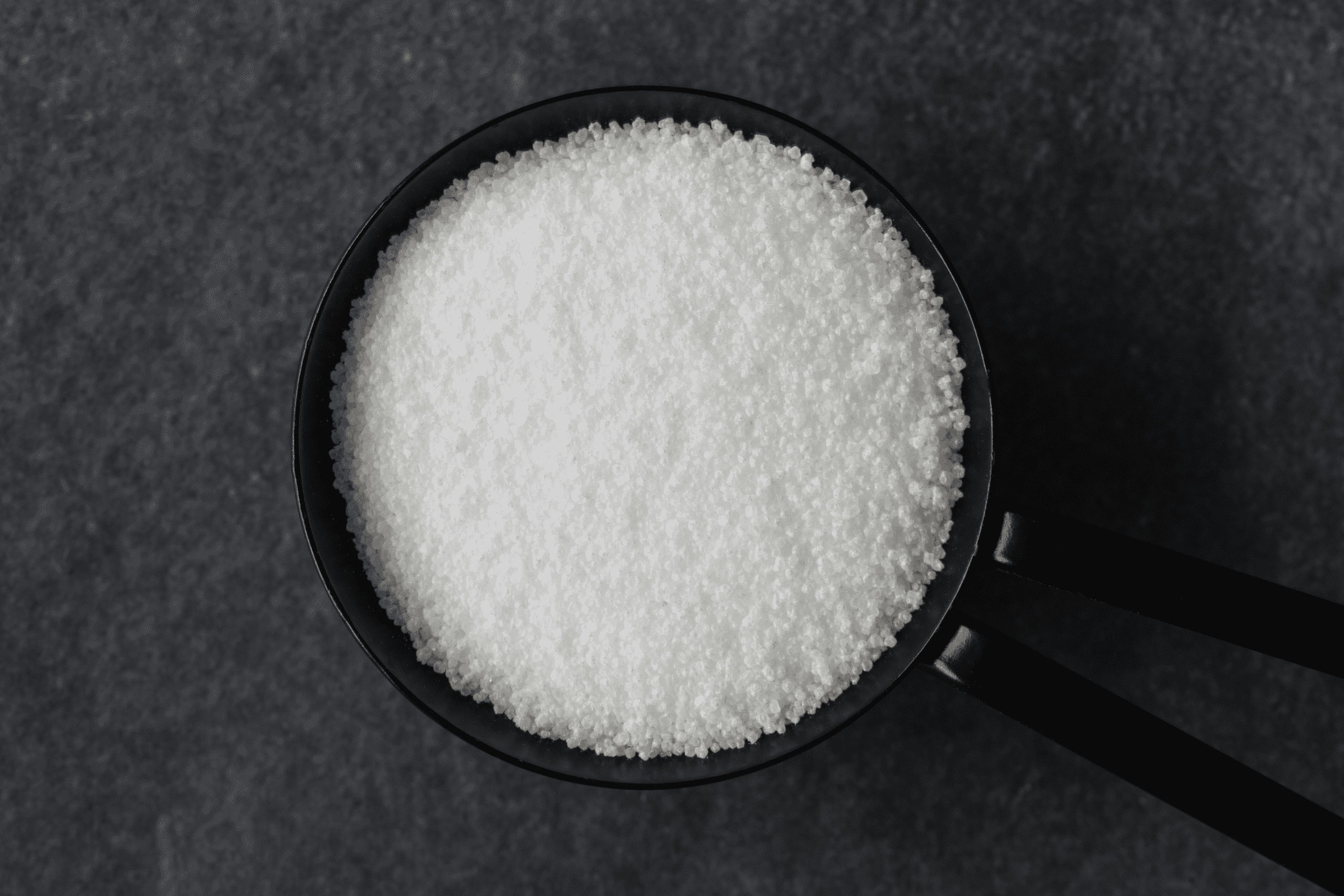
Out of the roughly 2.4 million tons of citric acid produced globally each year, the pharmaceutical industry consumes around 12% — a small share by volume, but one that underpins a disproportionately wide range of drug products. From effervescent analgesics and oral antibiotic syrups to lyophilised biologics and blood collection anticoagulant solutions, citric acid (C₆H₈O₇) is one of the most versatile excipients in modern pharmaceutical formulation.
Its three carboxylic groups and one hydroxyl group give it a combination of properties — acidity, buffering capacity, and metal-ion chelation — that no single-function excipient can match. This article outlines how those properties translate into real pharmaceutical applications, and what formulators need to watch for when designing with citric acid.
Need help?
Reach out to us today!
Why Citric Acid Is a Multifunctional Excipient
In pharmaceutical formulation, citric acid is rarely asked to do just one job. As reviewed in Citric Acid: A Multifunctional Pharmaceutical Excipient, its utility comes from a single molecule delivering multiple effects in the same formulation:
- pH control through its three distinct pKa values, allowing citric acid/citrate buffer systems to stabilise formulations across a clinically useful pH range.
- Metal-ion chelation, which protects oxidation-sensitive active pharmaceutical ingredients (APIs) from trace metal-catalysed degradation.
- Effervescence when combined with carbonate or bicarbonate salts, generating CO₂ to support rapid tablet disintegration.
- Taste modification, softening bitter API profiles in paediatric and oral liquid dosage forms.
- Process roles in lyophilisation, polymer crosslinking, and co-crystal / co-amorphous formulation strategies.
It is also pharmacopoeially well-established: monographs exist in the United States Pharmacopeia (USP) and the European Pharmacopoeia, and both the monohydrate and anhydrous forms are widely used.
Application 1: pH Control and Buffering in Liquid and Parenteral Drugs
This is the most common pharmaceutical use of citric acid. Most drug solutions — oral syrups, elixirs, injectables — require a controlled pH to keep the API stable, soluble, and bioavailable. A pH shift of even one unit can change an API's ionisation state, its solubility, and in some cases its degradation rate.
Citric acid forms buffer systems with its conjugate bases (monosodium, disodium, and trisodium citrate) that resist pH changes across a useful range for pharmaceutical formulations. This is why it appears in parenteral administration dosage forms, including intramuscular injections, as well as in oral solutions and topical preparations.
For injectable formulations, pharmacopoeial-grade citric acid (meeting USP or EP monograph requirements) is mandatory, and supply documentation must cover elemental impurities per ICH Q3D and nitrosamine risk assessment — a point that has become particularly sensitive since the regulatory tightening around nitrosamine contamination in drug products.
Application 2: Effervescent Tablets and Powders
The citric acid + sodium bicarbonate effervescent couple is one of the oldest and most effective solid dosage technologies. On contact with water, the acid and the carbonate react to release CO₂, which disintegrates the tablet, improves dissolution, and masks unpleasant API taste. Effervescent systems are standard for analgesics, antacids, effervescent multivitamins, and rehydration salts.
A more sophisticated application is gastro-retentive floating tablets: effervescent, buoyant tablets designed to float in gastric fluid and release their API slowly over hours. This technology is particularly useful for drugs with absorption windows limited to the upper gastrointestinal tract, or drugs unstable at intestinal pH. Literature describes this approach applied to verapamil, ciprofloxacin, dipyridamole, lisinopril, and venlafaxine, among others — covering antihypertensives, antibiotics, and antidepressants.
For these applications, the anhydrous form of citric acid is preferred: the monohydrate introduces water that can trigger premature reaction with the bicarbonate during manufacturing and storage, compromising tablet integrity and shelf life.
Application 3: Lyophilisation (Freeze-Drying) of Biologics and Labile APIs
Lyophilisation is a cornerstone process for stabilising biologics, peptides, and other heat-sensitive pharmaceuticals. Citric acid is a common excipient in lyophilised formulations, primarily for pH control both during the freezing stage and upon reconstitution.
The challenge in lyophilisation is that buffer components can crystallise at sub-zero temperatures, creating phase separations where local pH values diverge from the bulk formulation — potentially degrading sensitive actives. Citric acid's behaviour in this context has been extensively studied, including its effect on the glass transition temperature (Tg) of formulations: anhydrous citric acid has a Tg of 11 °C, while the monohydrate has a Tg of −25 °C. These values are critical when designing freeze-drying cycles and determining appropriate shelf temperatures.
A known formulation challenge: in solid state, citric acid retains its degree of ionisation and can cause sucrose protonation and inversion, which may then react with other formulation components and cause decomposition. Formulators designing lyophilised products with sucrose as cryoprotectant need to account for this interaction.
Application 4: Anticoagulant in Blood Collection and Apheresis
One of the most clinically important pharmaceutical uses of citric acid is not as an excipient but as the active component of anticoagulant solutions for extracorporeal blood processing. Anticoagulant Citrate Dextrose Solution USP (ACD Solution A), for example, contains 0.8% citric acid monohydrate, 2.2% sodium citrate dihydrate, and 2.45% dextrose monohydrate in water for injection, and is used in apheresis and platelet-rich plasma procedures.
The mechanism is straightforward but elegant: citrate acts as an extracorporeal anticoagulant by binding the free calcium in blood, and calcium is a necessary co-factor for several steps in the coagulation cascade. Remove the calcium, and the blood will not clot — but only where the citrate is present. Once the blood returns to the patient, citrate is rapidly metabolised and the anticoagulant effect disappears.
ACD first entered clinical use for apheresis in 1977 and is now preferred over heparin for centrifuge-based systems because it is cheaper, safer, and cleared from the body faster. It is a textbook example of a pharmaceutical where supply-chain quality and sterile-grade sourcing are non-negotiable: these solutions are sterilised by steam, packaged in polyolefin bags, and supplied under USP specification with full traceability.
Application 5: Solubility Enhancement, Co-Crystals, and Co-Amorphous Systems
A more recent area of pharmaceutical development concerns citric acid as a co-former in solid-state formulation strategies for poorly soluble APIs. Citric acid can form co-crystals and co-amorphous systems with APIs, improving their dissolution rate and bioavailability without chemically modifying the drug molecule itself.
Beyond solubility enhancement, citric acid is used in polymer excipients: for example, β-cyclodextrin polymers obtained by crosslinking β-cyclodextrin with citric acid have been developed as multifunctional direct-compression tablet excipients, offering compressibility and flowability suitable for tablet manufacturing.
These advanced applications reflect a broader trend: citric acid is no longer just a pH adjuster. In modern formulation science, it is increasingly exploited as a functional polymer building block and solid-state modifier.
Application 6: Taste Masking in Paediatric and Oral Liquid Formulations
Citric acid plays a discrete but important role in improving patient experience with oral liquid and chewable dosage forms. Bitter APIs — particularly many antibiotics and antivirals — are often unpalatable to the point that paediatric patients refuse them, compromising treatment compliance. Citric acid's tart flavour profile masks bitterness effectively, and the effect is enhanced when combined with sweeteners and flavouring agents.
In oral suspensions, solutions, and elixirs, citric acid's dual role as pH adjuster and taste modifier allows formulators to achieve both chemical stability and patient acceptability in a single ingredient — a particularly useful combination in paediatric formulation development.
Grades and Regulatory Requirements
For pharmaceutical use, only USP or EP pharmacopoeial-grade citric acid is acceptable. Key regulatory considerations include:
- Compliance with the citric acid monograph in the relevant pharmacopoeia (USP, EP, JP).
- Elemental impurities control per ICH Q3D.
- Nitrosamine risk assessments, which have become a standard supplier expectation.
- IPEC-GMP or pharmaceutical-grade GMP manufacturing standards for excipient supply.
- Full traceability documentation: Certificate of Analysis (CoA), Safety Data Sheet (SDS), and in many cases a Drug Master File (DMF) reference to support regulatory submissions.
- Choice between monohydrate and anhydrous forms, selected based on the process requirements (anhydrous for effervescent systems and dry blends; monohydrate for most liquid applications).
For a broader overview of excipient sourcing, documentation, and the role of specialty distributors in pharmaceutical supply chains, see our article on Active Pharmaceutical Ingredients and Excipients: The Distributor's Role.
Formulation Challenges to Watch
A few practical points that recur in pharmaceutical development:
- Sucrose inversion in solid-state or lyophilised formulations — citric acid can protonate sucrose even in the solid state, producing invert sugar fragments that may react with other formulation components.
- Moisture sensitivity in effervescent systems — the monohydrate form introduces enough water to trigger premature reaction with bicarbonate. Anhydrous is non-negotiable in these formulations.
- Incompatibility with alkali-sensitive APIs — the acidic pH that citric acid establishes may destabilise APIs that require neutral or alkaline conditions.
- Citrate toxicity in blood products — although this is a clinical rather than formulation concern, it is a documented reality of ACD-based apheresis: citrate reactions may occur with infusion and return of citrate-anticoagulated blood, with symptoms ranging from paraesthesia to hypotension.
Citric Acid Monohydrate vs Anhydrous — Frequently Asked Questions
What is the difference between citric acid monohydrate and anhydrous citric acid?
Both are the same molecule (C₆H₈O₇) but differ in water content. Anhydrous citric acid contains no water molecules in its crystalline structure, while the monohydrate form incorporates one water molecule per citric acid molecule (C₆H₈O₇·H₂O), giving it a molecular weight of 210.14 g/mol versus 192.12 g/mol for the anhydrous form and a water content of approximately 8.6%.
Which form is preferred for effervescent tablets and dry pharmaceutical formulations?
Anhydrous citric acid is the standard choice for effervescent tablets, dry blends, and solid dosage forms. The monohydrate form
introduces moisture that can trigger premature reaction with sodium bicarbonate during manufacturing or storage, compromising tablet
integrity and shelf life.
Is citric acid monohydrate suitable for liquid pharmaceutical formulations?
Yes. For oral syrups, liquid medications, and solutions, both forms are suitable — the water content of the monohydrate is not a
drawback in aqueous systems. Monohydrate also tends to dissolve slightly faster initially, which can be an advantage in liquid
processing. Final solubility in water is equivalent for both forms (approximately 59.2% at 20°C).
Which form is more stable during storage?
Monohydrate is generally more stable in humid environments. Anhydrous citric acid is hygroscopic — it actively absorbs moisture from the
air — which makes controlled storage conditions essential when using the anhydrous form in solid formulations.
At what temperature does citric acid monohydrate convert to the anhydrous form?
Above approximately 36.6°C, citric acid monohydrate loses its bound water molecule and converts to the anhydrous form. This threshold is relevant for hot-melt extrusion processes and storage in warm clim