


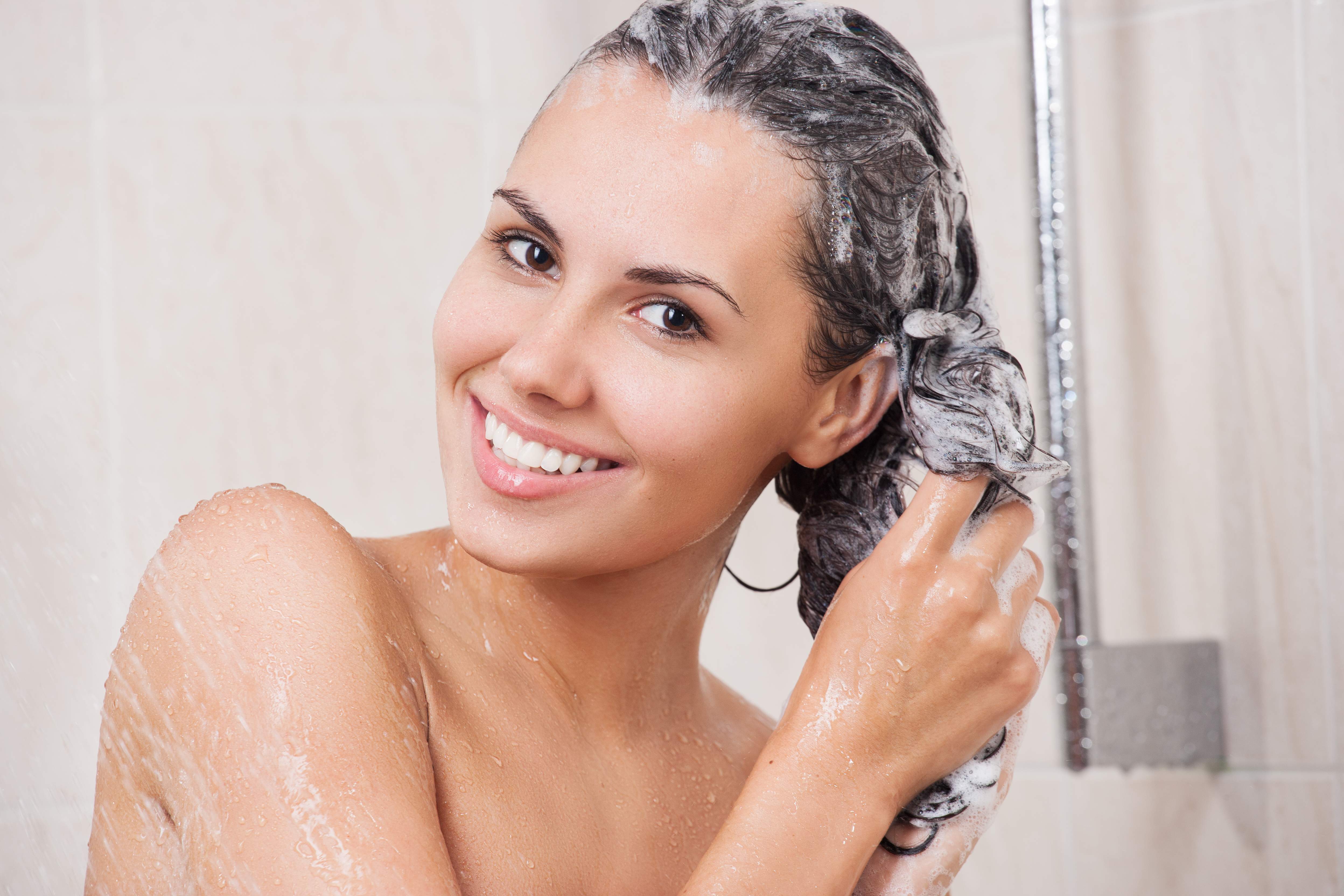
Your shampoo needs to pour smoothly from the bottle, lather generously, then rinse off completely in thirty seconds. Your face serum needs to sit still in its dropper, spread evenly across skin, and stay there — hydrating, delivering actives, and feeling elegant — for the next eight hours. Both products depend on a rheology modifier. But the constraints governing that choice diverge sharply the moment you ask whether the formulation is meant to stay on or be washed off.
For a broader overview of how rheology modifiers work mechanically and which families exist across cosmetic formulation types, the complete cosmetics guide covers the full picture. For rheology modifiers across all industries — paints, rubber, food — the general rheology modifiers article provides a wider frame.
Ready to Work Together?
Get in touch with our team and discover tailored solutions for your industry
Why the Leave-On / Rinse-Off Distinction Changes Everything
The distinction isn't just a matter of exposure time. It determines which ingredient levels are regulatory compliant, what sensory profile the consumer will perceive on skin or hair, the electrolyte environment the modifier must survive, and how it needs to perform alongside surfactant systems.
The substitution of synthetic polymers with natural and naturally modified additives is only at the beginning in the cosmetic industry: while this shift has already been accomplished in many rinse-off products, leave-on formulations still rely on traditional polymers in most cases. That gap reflects genuine formulation difficulty, not regulatory inertia, and understanding why is the first step toward choosing the right modifier for each application.
In rinse-off products, the modifier must build enough viscosity to give the product body and sensorial pick-up while remaining compatible with high concentrations of surfactants. In leave-on products, the modifier must maintain viscosity over months of storage, deliver a non-tacky, non-stringy skin feel, and — increasingly — meet biodegradable and COSMOS-compliant criteria without compromising on performance.
Rinse-Off Applications: The Surfactant Compatibility Problem
Why standard thickeners fail in surfactant systems
Shampoos, body washes, conditioners, and cleansers share a common constraint: they're built on surfactant systems, typically anionic or amphoteric, and the continuous aqueous phase is strongly ionic. Shampoo products contain a combination of surfactants for cleansing, plus polymers and sodium chloride as rheological modifiers, and are typically produced as a viscous liquid. That ionic load explains why carbomers — the workhorse of leave-on gel formulation — are a poor fit in rinse-off systems: their viscositybuild collapses in the presence of electrolytes, and they interact poorly with the anionic surfactant micelles that carry the thickening load.
NaCl is the traditional viscosity builder for anionic surfactant systems (typically 1–3%), but its effective range is narrow. At higher concentrations, micellar transition can reverse the viscosity gain. Polymer-based alternatives have progressively displaced salt thickening in more sophisticated rinse-off formulations, particularly in sulfate-free systems where salt thickening is even less effective.
HEC and HPMC: workhorses for aqueous rinse-off systems
Hydroxyethyl cellulose (HEC) and hydroxypropyl methylcellulose (HPMC) are the cellulose derivatives most widely used in rinse-off personal care formulations. They are nonionic — a critical advantage — which means they thicken aqueous systems without interacting destructively with anionic or cationic surfactant components. HEC (0.5–1.5%) provides reliable viscosity build independent of electrolyte concentration and tolerates the broad pH range and salt loads typical of cleansing formulations. HPMC adds film-forming capacity, relevant in conditioning rinse-off products where some deposition is desired even after washing.
Both work by chain entanglement: long polymer chains physically intertwine in the aqueous phase, building resistance to flow in proportion to concentration. They do not generate a meaningful yield stress, which means they will not prevent long-term sedimentation — a limitation that matters less in rinse-off products, where the absence of suspended particles simplifies stability management.
Guar and hydroxypropyl guar in rinse-off hair care
In hair care, guar gum and its derivatives have found a niche shaped by compatibility with cationic ingredients. Hydroxypropyl guar is noted for its film-forming and lubricating properties that deliver a smooth feel to skin and hair. In rinse-off shampoo and conditioner formulations, its nonionic character makes it compatible with cationic conditioning agents that would precipitate anionic polymers — a real advantage in two-in-one formats. It thickens surfactant systems and contributes sensorial enhancement at the moment of rinsing.
The cationic derivative, guar hydroxypropyltrimonium chloride, deposits efficiently in rinse-off systems, forming a thin conditioning film that helps retain moisture without feeling greasy or heavy. Its ability to bind to the negatively charged surface of hair during washing and stays after rinsing, making it one of the most effective conditioning polymers for shampoo, particularly in sulfate-free systems where conditioning deposition is otherwise harder to achieve.
Formulating for clarity and viscosity build in rinse-off products
Clear gels in body wash and shampoo present a specific challenge: the rheology modifier must build viscosity without introducing haze, and must remain stable across the salt concentrations generated by the preservative system and any added active. Acrylate-based associative polymers (HASE-type) offer better electrolyte tolerance than standard carbomers and interact with surfactant micelles through a combination of polymer network formation and micellar entanglement. They are a practical solution for building viscosity in surfactant systems while maintaining product clarity.
Leave-On Applications: Permanence, Skin Feel, and Stability
The skin feel imperative
In a leave-on product — a face cream, a serum, a sun care formulation, a conditioner — the consumer's tactile experience doesn't end when they wash their hands. Sensorial profile is a primary selection criterion here, on par with viscosity targets and stability requirements.
The modifier choice directly shapes whether a product feels rich or light, tacky or non-tacky, stringy or short-flow. Carbomers produce a short-flow rheology — gels break cleanly on application rather than forming strings — a texture most consumers prefer in leave-on products. That texture is why carbomers remain the dominant thickener in leave-on serums and facial gels despite their well-known electrolyte sensitivity and neutralization requirement.
For leave-on emulsions, the rheology modifier also participates in emulsion stabilization — preventing creaming, coalescence, and phase separation over a product shelf life of 24 to 36 months. Rheology modifiers in emulsion-based formulations control suspension, prevent syneresis, contributing to the texture and feel of the finished product. The modifier must handle all of that while remaining invisible to the consumer — no grittiness, no residue, no interference with active delivery.
Acrylate crosspolymers in leave-on emulsions and sun care
Acrylates/C10-30 alkyl acrylate crosspolymers (the HASE family, hydrophobically modified) bring improved electrolyte tolerance compared to standard carbomers. They are the preferred choice in vitamin C serums, AHA-based formulations at low pH, and mineral sun care products where the ionic load from inorganic UV filters would destabilize a conventional carbomer gel.
In sun care, the modifier's role extends beyond viscosity build: it must suspend mineral UV filter particles (zinc oxide, titanium dioxide) uniformly in the aqueous phase without settling, and must maintain film-forming efficacy on skin application for photostability. Polymeric additives can improve their efficacy, since uniform distribution on skin depends on how the formulation flows.
Natural biopolymers in leave-on: promise and limitation
In rinse-off products, the transition to natural biopolymers is already largely accomplished; in leave-on formulations, the challenge of matching synthetic polymer performance — particularly on skin feel and long-term stability — means traditional synthetic polymers still dominate. The stumbling block isn't regulatory; it's sensorial: natural gums at the use levels needed for comparable viscosity build often introduce a ropy, stringy flow behavior that reads as low quality in leave-on serums and face creams.
Research on polysaccharide combinations — sclerotium gum, xanthan gum, and carrageenan in synergistic blends — has shown that acrylic rheology modifiers can be replaced in oil-in-water emulsions, though fully replicating synthetic texture profiles requires careful optimization. Hydroxypropyl guar, in its non-cationic form, performs well in leave-on skincare gels: it forms a light, breathable film on the surface rather than seeping into pores or leaving an oily residue, and rinses away easily with water. That makes it interesting in hybrid formats — leave-on products designed for skin types that resist heavier film-forming systems.
Biodegradable options and regulatory pressure
REACH microplastic restrictions and COSMOS certification requirements are progressively narrowing the eligible polymer pool in European personal care formulations, with pressure across both leave-on and rinse-off categories. The exposure route — rinse-off versus leave-on — should drive the polymer architecture selection when substituting biodegradable polymers for legacy synthetics. A biodegradable polymer validated for rinse-off performance should not be assumed to perform equivalently in a leave-on application without dedicated stability and sensorial testing.
Key Decision Variables at the Leave-On / Rinse-Off Boundary
A few formulation parameters consistently differentiate the two contexts:
- Electrolyte tolerance. Rinse-off formulations typically operate at higher ionic loads (surfactant salts, salt thickeners, preservation systems). This generally rules out standard carbomers and favors nonionic cellulose derivatives or electrolyte-tolerant associative polymers. Leave-on systems vary more widely — from low-electrolyte serums where carbomers perform well to high-electrolyte mineral sunscreens requiring acrylate crosspolymers.
- Use levels. Rinse-off products typically run higher polymer concentrations to compensate for dilution during application. Leave-on products can operate at lower concentrations because the modifier is never diluted, which makes performance at low concentrations a more relevant differentiator when evaluating natural biopolymers against synthetics.
- Biodegradable compliance. Regulatory and market pressure toward biodegradable and naturally derived polymers applies in both categories, but the performance bar is higher in leave-on formulations. Formulators choosing natural gums for leave-on personal care formulations need to address compatibility with a broader range of actives, greater susceptibility to microbial challenge over long storage, and the sensorial limitations at higher use levels.
- Compatibility with surfactant systems. In rinse-off products, compatibility with anionic, cationic, and amphoteric surfactants is required. The best thickener for a leave-on emulsion — a carbomer gel structure — performs poorly in a shampoo. The best thickener for a sulfate-free shampoo — a guar-xanthan blend — may introduce undesirable skin feel in a face serum.
Working with the Right Supplier
Choosing the right rheology modifier for a leave-on or rinse-off application requires access to a portfolio broad enough to cover both application contexts, and technical support that understands the formulation constraints specific to each. Safic-Alcan, as a specialty chemical supplier active in over 90 countries, supports personal care formulators across these categories — from standard cellulose derivatives for rinse-off systems to acrylate crosspolymers and natural biopolymers for leave-on applications.
Get support from our team to discuss your formulation needs, identify the right rheology modification strategy, and access technical documentation for your specific application.