


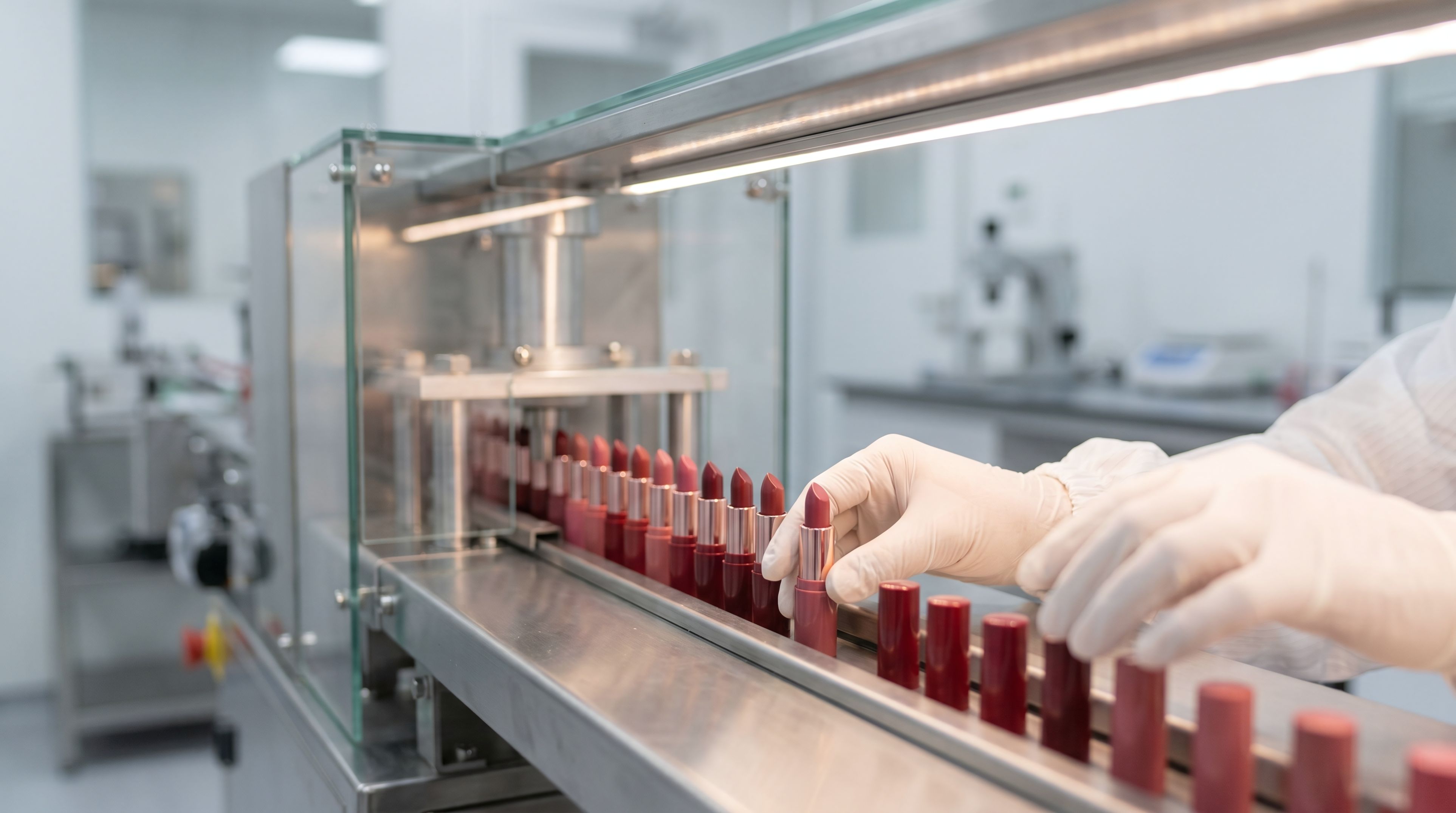
Formulators rarely ask for an emollient by name. They ask for a result: a stick that glides without dragging, colour that lays down in one pass, gloss that survives the first coffee, and no sweating in a warm delivery van. In a lipstick, the oil phase is where most of that is decided: emollients typically make up half to two thirds of the formula (Formula Chemistry), and they carry the pigment, the feel and much of the stability with them. This guide maps the properties you want to the emollient families that deliver them.
Quick answer
- Start from the pigment: it is ground into a viscous, polar emollient, and castor oil remains the reference for that step.
- Add gloss and cushion with heavy branched esters, and slip with light esters.
- Use tackifiers for wear, sparingly, because tack is what consumers notice first when it is wrong.
- Check the wax to oil balance before blaming an emollient: crumbling, sweating and drag are usually ratio problems.
The three jobs of the oil phase
A lipstick is built in three stages: a pigment grind, a wax base and a dilution oil blend (UL Prospector). The oil phase has to do three things at once, and no single emollient does all three well.
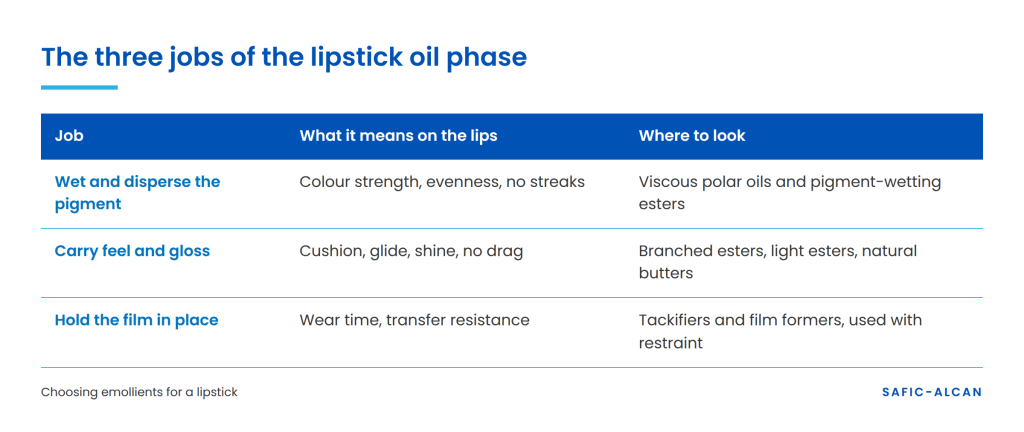
Castor oil dominates the first job. It is unusually viscous and polar, which makes it very good at wetting and dispersing pigments, and it dries to a glossy film, which is why pigments are normally ground into it before the rest of the formula is built (Formula Chemistry). Vegetable oils and esters are also good solvents and support pigment wetting and dispersion (SpecialChem).
Choosing by the property you need
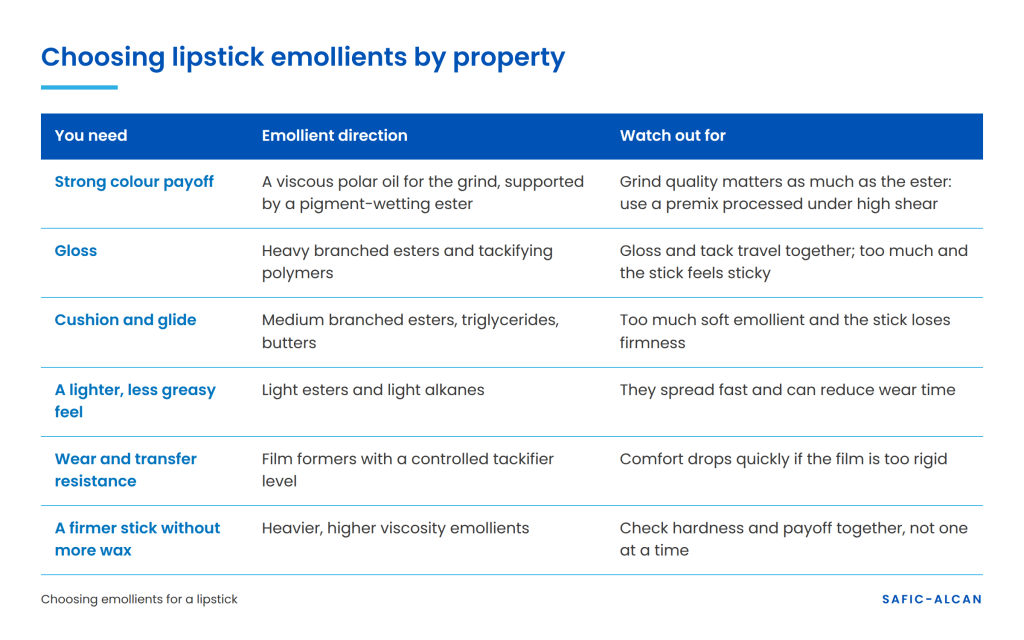
That last line comes straight from practice: firmness can be raised by adding heavier, more viscous emollients rather than by pushing up the wax level, which is what usually causes drag. Formulators also use fumed silica to improve payoff, reduce pigment settling and limit oil bleeding (UL Prospector).
Looking for an emollient with a specific feel?
Tell us the texture and the finish you want, and the constraints you have. Safic-Alcan cosmetic specialists will send a shortlist and samples available in your market.
Where sustainable and silicone-free options fit
Two requests now come up in almost every brief: a lighter, non-greasy finish, and fewer silicones. Light branched alkanes cover part of that ground. Neossance™ Hemisqualane, a C13-15 alkane produced by fermentation of sugarcane, is used in make-up for slip and a non-greasy finish; it is described as non-volatile, so it does not reproduce the flash-off of a volatile silicone. Our guide to squalane and hemisqualane covers the ingredient in detail, and our D5 replacement guide covers the volatile side of the question, which matters because D5 is restricted in EU leave-on products from 6 June 2027.
For the natural side of the palette, our guide to formulating with natural oils and waxes sets out what changes when you move part of the oil phase to vegetable sources, including oxidation, which needs an antioxidant in the formula.
Before you change emollient, check the ratio
Most lipstick complaints are ratio problems rather than ingredient problems: a typical base runs roughly 10% to 20% wax, 50% to 65% oils and emollients, and 5% to 20% pigments and fillers (Formula Chemistry). Two classic failures illustrate it.
- Sweating. Higher temperature alters the wax and oil equilibrium and the oil migrates to the surface of the stick. The answer is usually the wax blend, not a different emollient.
- Poor gloss. Large wax crystals reduce gloss. Blends of crystalline and amorphous waxes, and materials that form small crystals, help more than adding oil (UL Prospector).
If your sticks fail stability testing, start with our article on why stick formulas keep failing stability tests. For the sensory vocabulary behind cushion, slip and drag, see our guide to sensory modifiers.
Reworking a lipstick base?
Safic-Alcan can propose emollient and wax combinations from the ranges we distribute in your country, and send samples for your trials.
Frequently asked questions
How much of a lipstick is emollient?
In a typical base, oils and emollients make up roughly half to two thirds of the formula, with waxes around 10% to 20% and pigments and fillers 5% to 20%. The exact split is what separates a matte from a satin finish.
Why is castor oil used in almost every lipstick?
Because it is viscous and polar, which makes it very effective at wetting and dispersing pigments, and it dries to a glossy film. Pigments are usually ground into it before the rest of the formula is built.
My lipstick sweats in the heat. Is the emollient wrong?
Usually not. Sweating comes from the wax and oil equilibrium shifting with temperature, so the oil migrates to the surface. Look at the wax blend and the oil load before changing emollient.
Can I make a lipstick without silicones?
Yes. Light branched alkanes and esters cover most of the slip and finish. What is harder to reproduce is the flash-off of a volatile silicone, which matters more in liquid lip products than in sticks.
How do I get more gloss without more tack?
Raise gloss with heavy branched esters first and keep tackifiers at the minimum that holds the wear. Gloss and tack are linked, so they need to be judged together on the lips, not in the beaker.