


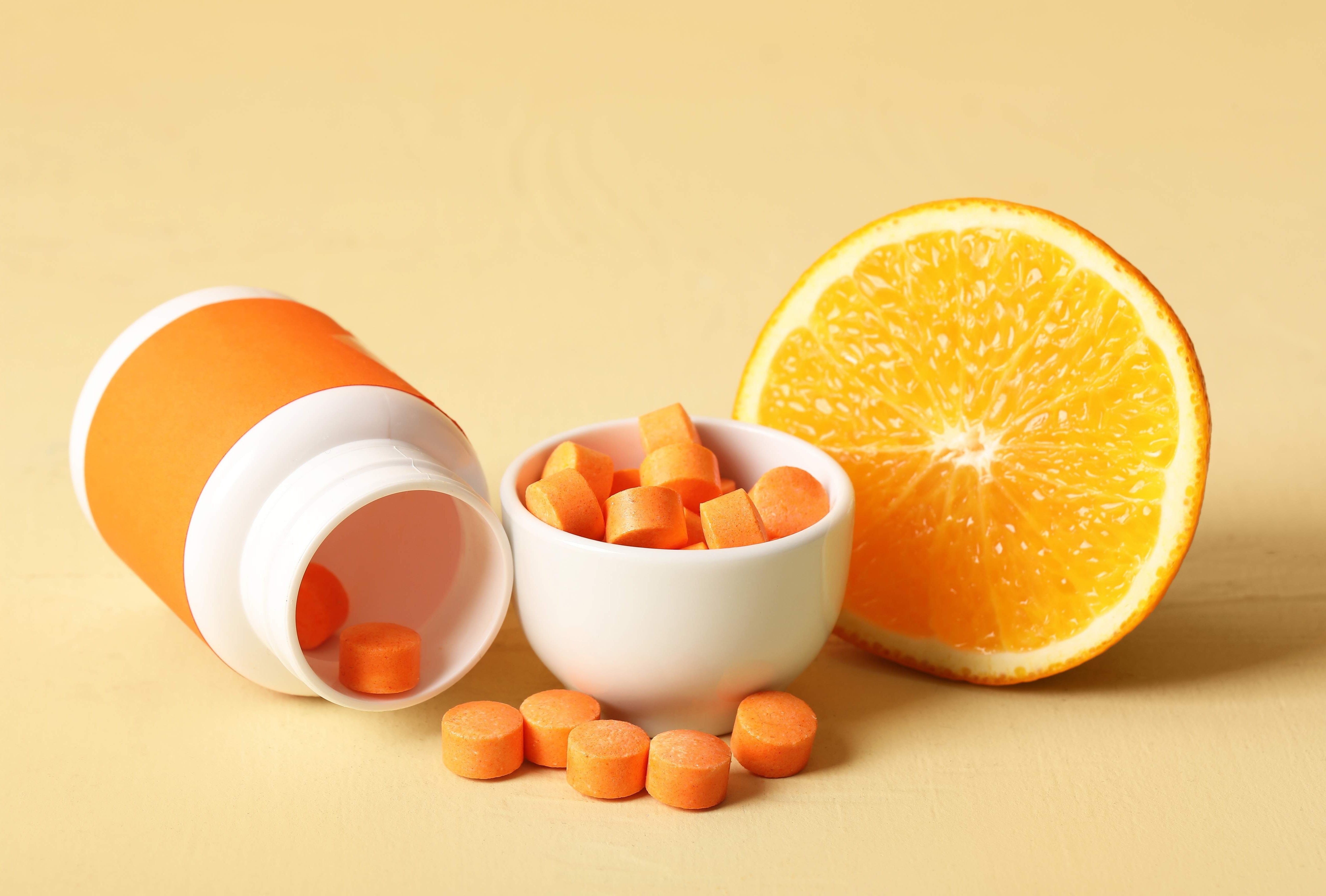
Nutricosmetics are oral supplements — capsules, powders, drinks, or gummies — formulated to improve the appearance and health of skin, hair, and nails through internal biological mechanisms. They sit at the intersection of nutrition and cosmetics, working alongside topical products rather than replacing them. The most widely used active ingredients are hydrolyzed collagen, hyaluronic acid, biotin, vitamins C and E, omega-3 fatty acids, and carotenoids. The global market was valued at around USD 8.5 billion in 2024 and is growing at roughly 7 to 8% per year, driven by consumer demand for science-backed, holistic approaches to beauty and by an ageing population in high-income markets.
The idea that what you eat affects how you look is not new. What is new is the convergence of nutritional science, ingredient technology, and consumer behaviour that has turned ingestible beauty into one of the fastest-growing segments in the global health and beauty market. Formulators, brand owners, and distributors working in the food supplement and cosmetic space are increasingly being asked to bridge both worlds — understanding which active ingredients have clinical backing, how they are regulated, and what formats resonate with consumers.
This article covers the definition, the key ingredient categories, the evidence, the regulatory framework, and the market dynamics behind the nutricosmetics trend.
Want to talk to our cosmetics experts ?
Reach out today to get all the support you need
What Nutricosmetics Are
The term "nutricosmetics" was coined to describe the overlap between nutraceuticals (food-derived compounds with health benefits) and cosmetics. According to a 2024 review published in AgroFOOD Hi Tech, nutricosmetics can be defined as the oral supplementation of nutrients that improves the condition, appearance, and aesthetics of skin, nails, and hair — sitting at the intersection of nutrition and cosmetics.
They are not medicines, and they are not cosmetics in the legal sense. In Europe, nutricosmetics are regulated as food supplements under Directive 2002/46/EC, which governs the composition, labelling, and marketing of concentrated nutrient products intended to supplement the normal diet. This regulatory positioning matters for manufacturers: it means that health claims on nutricosmetic products must comply with Regulation 1924/2006 and be authorised by the European Food Safety Authority (EFSA), not by national cosmetics bodies.
Capsules held the largest market share in 2024 due to superior bioavailability and dosing precision, while gummies and powders are growing fastest due to sensory appeal and ease of use — particularly among younger consumers who have grown up with wellness supplements as a routine category.
The Key Active Ingredient Categories
Nutricosmetic formulations draw from a defined set of ingredient categories, each with a different evidence profile and mechanism of action. A 2025 review published in the Adornata Journal synthesised evidence from meta-analyses, systematic reviews, and randomised controlled trials published between 2015 and 2025, covering the most clinically studied categories.
Hydrolyzed collagen
Collagen is the most widely used and best-evidenced active ingredient in the nutricosmetics category. The 2025 review identified hydrolyzed collagen as having the strongest evidence base, with a meta-analysis of 26 randomised controlled trials involving approximately 1,721 participants reporting significant improvements in skin hydration and elasticity following oral supplementation. Collagen production in the dermis declines progressively from the mid-twenties, making supplementation a logical intervention for skin ageing. Hydrolyzed collagen (collagen peptides) is absorbed more efficiently than native collagen, with low-molecular-weight peptides reaching the dermis and stimulating fibroblast activity.
Marine collagen and bovine collagen are the two dominant source categories. Marine collagen is typically derived from fish skin and scales; bovine collagen from cattle hide. Both are available in powder, capsule, and liquid formats. The sustainability profile of the source material has become an increasingly relevant selection criterion for brand owners.
Hyaluronic acid
Oral hyaluronic acid is the second most evidenced ingredient in the category. The same 2025 review found that oral hyaluronic acid supplementation shows benefits in skin hydration, elasticity, and wrinkle reduction, supported by findings from seven randomised controlled trials. Hyaluronic acid is naturally present in the dermis, synovial fluid, and connective tissue; its concentration declines with age, contributing to reduced skin moisture retention. Low-molecular-weight oral forms have shown better absorption profiles in clinical studies than high-molecular-weight forms.
Biotin (vitamin B7)
Biotin is the ingredient most closely associated with hair and nail health in consumer marketing. Its role in the nutricosmetics space is grounded in its function as a coenzyme in keratin infrastructure: biotin is essential to the enzymatic pathways that produce keratin, the structural protein of hair and nails. Clinical evidence supports supplementation primarily in cases of confirmed deficiency, which can manifest as hair thinning and brittle nails. For individuals without deficiency, the evidence for supraphysiological doses is less robust, though supplementation is generally well tolerated.
Vitamins C and E
Vitamin C holds a specific regulatory position in European nutricosmetic marketing: EFSA has approved the claim that vitamin C "contributes to normal collagen formation for the normal function of skin" at a minimum intake of 12 mg per day. This makes it one of the few ingredients for which a direct skin-related health claim can legally appear on EU product labelling. Vitamin C is also an antioxidant that protects cells from oxidative stress, which is relevant to photoageing. Vitamin E acts synergistically with vitamin C as a lipid-phase antioxidant, protecting cell membranes from free radical damage.
Omega-3 fatty acids
Omega-3 fatty acids (EPA and DHA, primarily from marine sources) contribute to the maintenance of normal skin function through their role in cell membrane integrity and inflammatory regulation. The skin's barrier function depends partly on adequate levels of polyunsaturated fatty acids in epidermal membranes. Omega-3 supplementation has shown benefits in conditions involving inflammatory skin response, including dry skin and some forms of dermatitis, in clinical trials. They are typically delivered in softgel capsule format due to their oil-based nature and susceptibility to oxidation.
Carotenoids and astaxanthin
Carotenoids such as beta-carotene and lycopene accumulate in skin tissue after oral intake and provide antioxidant protection against UV-induced oxidative damage. Astaxanthin, a ketocarotenoid derived from microalgae, has generated growing clinical interest for its potential in improving skin hydration and photoprotection. The 2025 Adornata review noted that astaxanthin shows promising results, though data remain limited compared to collagen and hyaluronic acid, with variability in dosing and study duration across available trials.
Probiotics
Probiotic supplementation for skin health operates through the gut-skin axis, the bidirectional relationship between gut microbiome composition and skin inflammatory status. The 2025 review identified clinical efficacy for specific probiotic strains in acne management, mediated by modulation of systemic inflammation and sebum production via gut microbiome pathways. This is an area of active research, with the diversity of probiotic strains and formulations making generalised claims difficult. Our gut health article covers the broader evidence base for probiotic supplementation.
What the Market Numbers Show
Multiple independent market research sources converge on a global nutricosmetics market valued at approximately USD 7.5 to 8.5 billion in 2024, with projected growth to USD 12 to 16 billion by 2030 to 2034. The compound annual growth rate is consistently estimated between 6.5% and 8.5% across sources, depending on scope and methodology. The most conservative estimate comes from Arizton at 6.49% CAGR to 2030; the highest from Precedence Research at 8.33% CAGR to 2034.
Asia Pacific dominated the market in 2024, accounting for around 47 to 70% of global revenue depending on the research source, driven by longstanding consumer familiarity with ingestible beauty products in Japan, South Korea, and China. In Europe and North America, the category is growing from a smaller base but with accelerating momentum, particularly in the premium and science-backed positioning tier.
The Regulatory Framework in Europe
In the EU, nutricosmetics are classified and regulated as food supplements, not as cosmetics or medicines. The foundational framework is Directive 2002/46/EC on food supplements, which defines permitted vitamins and minerals, their forms, and the notification requirements for placing products on the market. Ingredients not covered by the Directive's positive lists may still be used if they were commercially available before June 2002 and EFSA has not given an unfavourable safety opinion.
Health claims on nutricosmetic products are governed by Regulation 1924/2006 on nutrition and health claims. Only claims that appear on the EU authorised list — maintained by EFSA and the European Commission — may be used in labelling and marketing. This has a direct consequence for common nutricosmetic ingredients.
EFSA has not approved direct beauty claims for collagen. A product cannot legally claim in the EU that collagen "improves skin elasticity" or "reduces wrinkles." What can be claimed is that vitamin C "contributes to normal collagen formation for the normal function of skin" — because that specific claim for vitamin C has been authorised. Formulators must include sufficient vitamin C, zinc, or biotin to meet EFSA thresholds for authorised claims, and must use the approved wording precisely.
This regulatory gap between the clinical evidence for collagen and the absence of an authorised EFSA claim for it is a known tension in the category. Some brands use it on the ingredient label without making a functional claim; others position it under Article 13.1 "on-hold" botanical provisions, which carry regulatory risk as final EFSA opinions are issued.
Biotin holds an authorised EFSA claim that it "contributes to the maintenance of normal hair" and "contributes to the maintenance of normal skin," making it one of the most straightforward ingredients to deploy with compliant marketing in the European market. Zinc carries authorised claims for normal hair, skin, and nails.
Nutricosmetics and the Formulator's Perspective
For formulators working in food supplements or functional nutrition, nutricosmetics raise specific technical challenges beyond those encountered in standard supplement development.
Bioavailability and delivery systems
Many nutricosmetic actives have inherently low bioavailability when delivered in conventional formats. Collagen peptides need to be hydrolyzed to a sufficiently low molecular weight for intestinal absorption. Hyaluronic acid bioavailability varies significantly with molecular weight. Carotenoids are fat-soluble and require co-delivery with a lipid phase for adequate absorption. The 2024 AgroFOOD review highlighted modified delivery systems — including encapsulation, liposomal delivery, and nanoparticle approaches — as a key frontier for increasing the absorption of nutricosmetic ingredients with poor bioavailability or short shelf-life.
Stability
Vitamins C and E are susceptible to oxidation; collagen peptides can undergo Maillard reactions in the presence of reducing sugars at elevated temperatures; omega-3 oils are prone to lipid oxidation. Packaging selection, antioxidant co-formulation, and manufacturing conditions (particularly oxygen exclusion) are critical stability levers for nutricosmetic product development.
Sensory properties
Consumer acceptance of nutricosmetics is partly driven by format and taste, particularly for gummies, drinks, and powders. Marine collagen and certain plant extracts contribute off-notes that require masking. This is driving reformulation towards flavour-optimised and odour-neutral ingredient grades. The palatability of gummy formats has been a significant factor in expanding the consumer base for beauty supplements beyond those already accustomed to taking capsules.
Discover all our ingredients today
Our range in cosmetics catalogue includes active ingredient options relevant to nutricosmetic formulations.
Frequently Asked Questions
What is the difference between nutricosmetics and nutraceuticals?
Nutraceuticals is a broad term covering any food-derived compound with a demonstrated health benefit beyond basic nutrition, including disease prevention. Nutricosmetics is a subset focused specifically on beauty outcomes: skin appearance, hair health, and nail quality. All nutricosmetics are nutraceuticals in the broad sense, but not all nutraceuticals are nutricosmetics.
Do nutricosmetics actually work?
The evidence varies by ingredient. Hydrolyzed collagen has the strongest evidence base for skin hydration and elasticity, supported by a meta-analysis of 26 randomised controlled trials. Oral hyaluronic acid shows benefits in skin hydration and wrinkle reduction across seven RCTs. Biotin has clear evidence for deficiency-related hair and nail issues. For other ingredients such as astaxanthin, the evidence is promising but based on fewer and smaller trials. The category as a whole is supported by growing clinical literature, though dosing, formulation, and study duration vary significantly across studies.
Are nutricosmetics regulated in Europe?
Yes, as food supplements under Directive 2002/46/EC. They are not regulated as cosmetics or medicines. Health claims on nutricosmetic products must be authorised by EFSA under Regulation 1924/2006. Ingredients must appear on the permitted lists for vitamins and minerals, or must have been commercially available before June 2002 without an adverse EFSA safety opinion.
Can a product claim it reduces wrinkles or improves skin elasticity in the EU?
Not as a health claim on a food supplement label, unless the specific wording has been authorised by EFSA. No direct beauty claims for collagen have been authorised by EFSA to date. Authorised claims for skin health in the EU are available for vitamin C (collagen formation), zinc (normal skin maintenance), and biotin (normal skin and hair maintenance), using precise approved wording and minimum intake thresholds.
What formats are growing fastest in the nutricosmetics market?
Gummies and ready-to-drink formats are growing fastest from a consumer adoption standpoint, driven by palatability and lower psychological barrier to daily use compared to capsules. Capsules and softgels remain the largest segment by volume due to their superior bioavailability and ingredient stability. Powders are growing particularly in the sports and wellness crossover segment, where consumers blend collagen peptides into drinks or food.
What is the gut-skin axis and why does it matter for nutricosmetics?
The gut-skin axis refers to the bidirectional communication between the gut microbiome and skin function, mediated through immune, hormonal, and metabolic pathways. Imbalances in gut microbiome composition have been associated with inflammatory skin conditions including acne, rosacea, and psoriasis. Probiotic supplementation targeting specific bacterial strains has shown clinical efficacy in acne management in randomised controlled trials, by modulating systemic inflammation via gut pathways. It is an area of active research with significant commercial interest in the nutricosmetics space.