


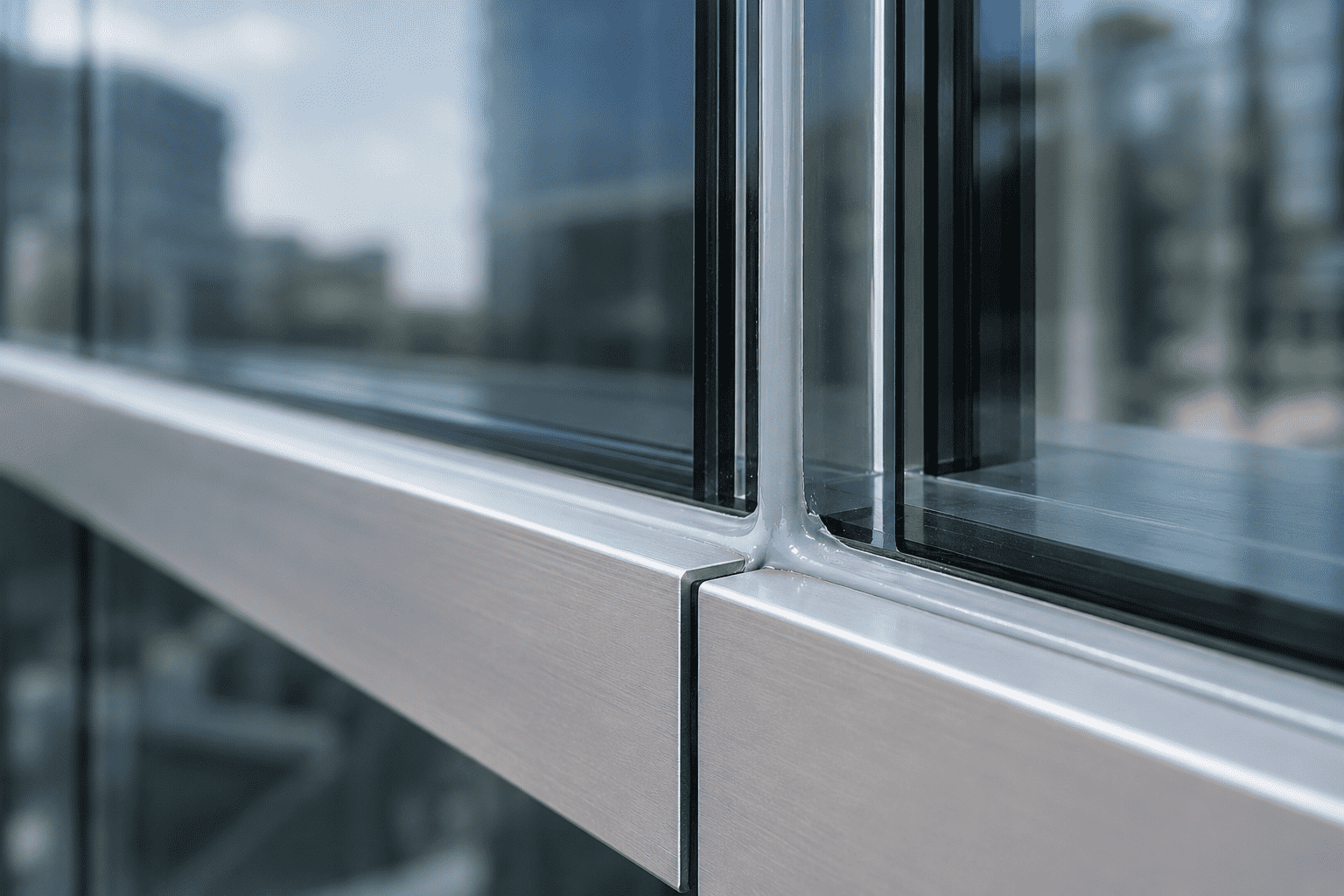
Silicone sealants are elastomeric polymer materials applied to joints and interfaces in buildings to block moisture, air, and contaminants while accommodating structural movement. In construction applications (from concrete joints and curtain wall glazing to flat roofs and window frames) their performance over decades determines the durability and weather-resistance of the whole building envelope.
Quick answer: Silicone sealants for construction must meet mechanical requirements (low modulus, high elongation at break, elastic recovery), environmental resistance (UV, moisture, extreme temperatures), and adhesion standards specific to each substrate. Key standards include ASTM C1184 for structural glazing sealants and RILEM TC 190-SBJ for durability assessment of building and construction sealants.
Find silicone sealant ingredients for construction
Browse our online catalog for Adhesives & Sealants
What defines a construction sealant?
A construction sealant is a field-applied elastomeric material used to seal joints between building components. Its core function is to maintain a continuous seal while the joint undergoes cyclic movement caused by thermal expansion, structural load, and moisture variation.
Silicone is the dominant polymer chemistry for demanding outdoor construction applications. Its backbone consists of alternating silicon and oxygen atoms (Si-O-Si), which confers thermal stability across a wide temperature range (typically from -55°C to 200°C for cured silicone rubber). This inorganic backbone distinguishes silicone from organic-backbone polymers such as polyurethane or acrylic, which are more susceptible to UV-induced chain scission.
Within the construction industry, silicone sealants fall into two main categories:
- Weatherproofing sealants, applied to facade joints, window perimeters, and wall interfaces to prevent water and air infiltration
- Structural silicone glazing (SSG) sealants, which mechanically bond glass panels to metal frames in curtain wall systems
Both categories share core performance requirements, but SSG sealants carry additional structural load and are therefore subject to stricter mechanical specifications under ASTM C1184.
Core performance requirements for construction sealants
Mechanical properties: modulus, elongation, and elasticity
The primary mechanical requirement for a silicone sealant in construction is the ability to accommodate joint movement without cohesive or adhesive failure. Joint movement results from the thermal expansion of facade materials (concrete, glass, aluminum, and stone) as well as from structural deflection and wind load.
Three mechanical properties are routinely tested:
- Tensile adhesion (ASTM C1135): the force required to pull the sealant from its substrate
- Elongation at break: the percentage extension before rupture
- Elastic recovery: the percentage return to original shape after deformation
A 2025 study in Buildings used multi-gradient aging tests to investigate the effects of temperature, humidity, stress, and UV irradiance on tensile bond strength (TBS). The study established a degradation model incorporating all four aging factors, finding that their combined effects govern long-term TBS loss more accurately than any single variable.
For structural glazing applications, ASTM C1184 requires a minimum tensile adhesion of 345 kPa (50 psi) in standard conditions, after water immersion, and after 5,000 hours of accelerated aging per ASTM C1442. These thresholds ensure the sealant bond does not become the weakest element in the glazing assembly under service loads.
Low modulus is a critical property for weatherproofing sealants: a stiffer sealant transmits higher stress to the substrate interface as the joint moves, increasing the risk of adhesive failure. Silicone formulations are routinely engineered to low-modulus grades for use in high-movement joints such as concrete facade panels.
Adhesion to construction substrates
Effective adhesion to substrates (glass, aluminum, anodized metal, concrete, and painted surfaces) is a baseline requirement. ASTM C1193 and the ASTM C1401 guide for structural sealant glazing both specify pre-construction adhesion testing to verify compatibility with the actual substrates present on a project.
Research in the ASTM durability series examined adhesion development of silicone sealants on both wet and dry concrete. The findings confirmed that surface moisture at the time of application affects early adhesion development, underlining the practical importance of substrate preparation protocols. For curtain wall construction, ASTM C1401 guidelines specify that adhesion testing must be performed on actual production substrates, including fluoropolymer-coated aluminum, which presents lower surface energy than anodized finishes.
Silicone chemistry offers a structural affinity for glass substrates that organic-backbone adhesives do not replicate, which is part of why structural glazing in commercial building construction defaults to silicone rather than polyurethane. The role of organosilanes as coupling agents at the silicone-substrate interface is a related factor: these hybrid molecules improve adhesion by bridging the inorganic substrate surface and the organic polymer matrix.
Formulating for difficult substrates?
Our technical team can help you match adhesion promoters
and silanes to your cure system.
UV and weather resistance
The Si-O-Si backbone of polydimethylsiloxane (PDMS) is significantly more resistant to UV degradation than carbon-based polymer backbones. UV radiation causes chain scission in organic polymers, progressively reducing elongation and increasing hardness. In silicone, the inorganic backbone is not directly attacked by UV photons at typical solar irradiance levels.
A 2021 study in the Canadian Journal of Civil Engineering subjected three fluid-applied silicone membranes to 5,000 hours of accelerated UV and moisture aging. The authors reported that the silicone membranes proved resilient under aggressive conditions representative of anticipated climate change scenarios, showing no significant cracking or oxidation. Weight loss, wetting propensity, and storage modulus remained stable throughout the 5,000-hour test.
A 2021 study on structural silicone adhesives under artificial aging (ScienceDirect) found that UV exposure produced measurable changes in FTIR spectra and tensile properties, consistent with surface chain scission, while the storage modulus of bulk samples was not significantly affected. The authors interpreted the tensile strength improvement over short exposure periods as evidence of UV-initiated post-curing.
This UV stability underpins the suitability of silicone for outdoor facade joints and structural glazing, where the sealant is fully exposed to solar radiation throughout its service life.
Moisture and waterproofing performance
Silicone sealants cure by moisture-initiated cross-linking at room temperature. Once fully cured, the material is hydrophobic: water does not penetrate the bulk elastomer or weaken the cross-linked network. This makes silicone a reliable waterproof barrier in joints exposed to rain, snow, and condensation.
In concrete masonry wall applications, joint sealants must accommodate both movement and intermittent water exposure. The CMHA notes that the sealant's primary function is to deform as the joint moves while maintaining a continuous seal, a requirement that silicone satisfies through its combination of elasticity and moisture resistance.
Long-term adhesion to wet concrete has been a subject of specific investigation. The ASTM durability series includes data on adhesion development under damp substrate conditions, which are common in field construction. Results demonstrate that while wet concrete slows initial adhesion development, properly prepared silicone bonds achieve full design strength on cure completion.
Thermal performance and temperature range
The service temperature range of cured silicone sealants (typically -55°C to 200°C) covers all climate conditions encountered in building construction, from arctic to tropical. This range encompasses both extreme cold (contraction joints in buildings subject to snow and freeze-thaw cycles) and high-temperature conditions at south-facing facades in hot climates.
High-temperature reliability testing found that elongation is the fastest-degrading property under thermal aging among tensile strength, elongation, modulus, and durometer. The data fit Arrhenius plots with R² = 0.99, allowing service life prediction under specific temperature exposure profiles. For building facade applications, service temperatures remain well below the thresholds where significant elongation loss occurs over decades.
The Buildings 2025 study specifically included temperature as one of four aging variables in its multi-gradient matrix, finding that temperature interacts with humidity and UV irradiance to drive TBS degradation in SSG sealants over simulated long-term service.
Long-term durability: what field studies show
40-year outdoor weathering data
One of the most cited datasets on silicone sealant durability comes from a 40-year study initiated in 1983 at an Atlas weathering test site in Miami, Florida. Thirteen sealants from six manufacturers, covering silicone, polyurethane, and acrylic chemistries, were applied to glass and painted aluminum panels mounted at 45° facing south, and evaluated at 22, 30, and 41-year intervals.
At each assessment interval, the silicone sealants maintained cohesive failure mode rather than adhesive failure, a technically significant result, because cohesive failure indicates that the bond to the substrate remained stronger than the bulk material throughout 40 years of outdoor exposure. In nearly every case, silicone outperformed polyurethane and acrylic in overall durability ranking across the five measured properties: adhesion, flexibility, resilience, hardness, and surface condition.
30-year natural weathering of a high-rise facade
A 2025 study in Polymer Degradation and Stability analyzed silicone sealants recovered from a high-rise tower facade after more than three decades of natural weathering. The authors found that acid rain was the most damaging environmental factor, dissolving filler particles and inducing microscale cracking. UV exposure caused slower, progressive deterioration of the silicon-carbon atomic structure.
Critically, the authors reported that despite these measurable degradation effects, the mechanical properties and visual appearance of the weathered sealant samples still conformed with performance standards at the time of recovery, confirming that the service life of well-formulated silicone sealants in a building facade context extends well beyond 20 years under real-world conditions.
Construction applications: where silicone sealants are specified
Structural glazing and curtain walls
Structural silicone glazing (SSG) uses silicone as the structural adhesive bonding glass to metal frame in curtain wall assemblies. The glass is held in place solely by the silicone bond; there are no mechanical fasteners at the glass edge. This places exceptional demands on adhesion durability, modulus, and resistance to cyclic loading.
ASTM C1401 and C1184 set out the design and specification requirements for SSG systems. The guide requires pre-construction adhesion testing on actual production substrates, joint geometry calculation based on glass weight and wind load, and in-service inspection protocols. RILEM TC 190-SBJ, developed specifically for durability assessment of structural glazing sealants, uses a tensile-compressive cyclic loading approach with 7-day cycles to simulate real aging phenomena.
Window and facade joints
In standard building construction, silicone sealants seal the perimeter of window frames to masonry or concrete walls, expansion joints in concrete facades, and interfaces between dissimilar materials (for example, between glass spandrel panels and aluminum framing). These applications require weatherproofing rather than structural load transfer, and typically use lower-modulus formulations.
The expected joint movement is calculated from the thermal expansion coefficients of the facade materials and the maximum temperature differential the facade will experience. A silicone sealant specified for a concrete facade panel joint must accommodate the panel's cyclic movement over decades without adhesive debonding or cohesive splitting.
Flat roof applications
Silicone sealants and membranes are used on flat roofs to seal penetrations, flashings, and joints between roofing materials. The flat roof environment combines standing water exposure, high UV irradiance on horizontal surfaces, and significant thermal cycling between day and night. Silicone's resistance to ponding water and UV light makes it a durable choice in this context, and unlike acrylic roof coatings, silicone-based products are typically warranted for ponding water exposure.
Comparative performance: silicone vs. alternative chemistries
The 40-year weathering study described above provides the most comprehensive published comparison of silicone against polyurethane and acrylic sealants under identical outdoor exposure conditions. The results show that:
- Polyurethane sealants showed progressive hardening and adhesive failure in outdoor exposure, consistent with UV-driven degradation of the urethane backbone
- Acrylic sealants lost flexibility significantly faster than silicone under outdoor UV and moisture cycling
- Silicone maintained elastic recovery (defined as return to original shape within 5 minutes of being bent 180° and released) throughout the full 40-year test period
Accelerated weathering studies in Construction and Building Materials (2005) also found that silicone structural adhesive maintained excellent adhesion to galvanized cold-formed steel under severe environmental conditions combining moisture, UV, and chemical exposure, outperforming MS-polymer and epoxy alternatives on outdoor substrates.
FAQ
What is a silicone construction sealant?
A silicone construction sealant is a room-temperature-curing elastomeric material based on polydimethylsiloxane (PDMS) polymer, applied to building joints to provide waterproofing, air-sealing, and accommodation of structural movement. It cures by reacting with atmospheric moisture.
How long does a silicone sealant last on a building facade?
Field data from long-term studies indicates that properly formulated and applied silicone sealants can remain within performance standards for over 30 years on exposed building facades. A 2025 study of sealant recovered from a high-rise after more than three decades of natural weathering found mechanical properties still conforming to current standards, despite measurable acid-rain-induced filler dissolution and microscale cracking.
What is the difference between a weatherproofing sealant and a structural silicone sealant?
Weatherproofing sealants seal joints against water and air infiltration without transferring structural loads. Structural silicone glazing sealants mechanically bond glass to frame in curtain wall systems: they must sustain the dead weight of the glass and dynamic wind loads over the service life of the building. ASTM C1184 specifies the minimum tensile adhesion (345 kPa) and aging resistance required for structural designation.
What substrates do silicone sealants bond to in construction?
Silicone construction sealants adhere to glass, anodized aluminum, painted metal, concrete, masonry, and stone. Adhesion to low-surface-energy substrates such as fluoropolymer-coated aluminum may require primer. ASTM C1401 and C1193 both mandate pre-construction adhesion testing on the actual substrates to be sealed before installation.
Why is silicone preferred over polyurethane for facade glazing?
Silicone's inorganic Si-O-Si backbone provides inherent UV resistance, thermal stability from -55°C to above 150°C, and long-term elastic recovery that organic-backbone polymers cannot match. A 40-year study found that silicone consistently outperformed polyurethane in adhesion, flexibility, and resilience under identical real-world exposure conditions. Polyurethane sealants showed progressive hardening under UV exposure, increasing their modulus and risk of cohesive failure in movement joints.
How is silicone sealant durability tested?
Durability assessment combines accelerated aging tests (UV exposure per ASTM C1442, thermal cycling, water immersion) with mechanical testing (tensile adhesion, elongation, hardness) at defined intervals. For structural glazing, RILEM TC 190-SBJ adds multiaxial cyclic mechanical loading to simulate actual joint movement during aging. Service life prediction models use Arrhenius methodology to extrapolate accelerated test data to real-world service temperatures.
What construction applications use silicone sealants?
Silicone sealants are specified for structural glazing and curtain wall systems, perimeter sealing of windows and doors, expansion joints in concrete facades and walls, flat roof penetrations and flashings, and joints between dissimilar materials in the building envelope. They are also used in repair applications where the original sealant has deteriorated.